One of the most exciting things about working at the Bruce Springsteen Center for American Music is that we truly never know who is going to walk through the doors.
Maybe it will be Bruce.
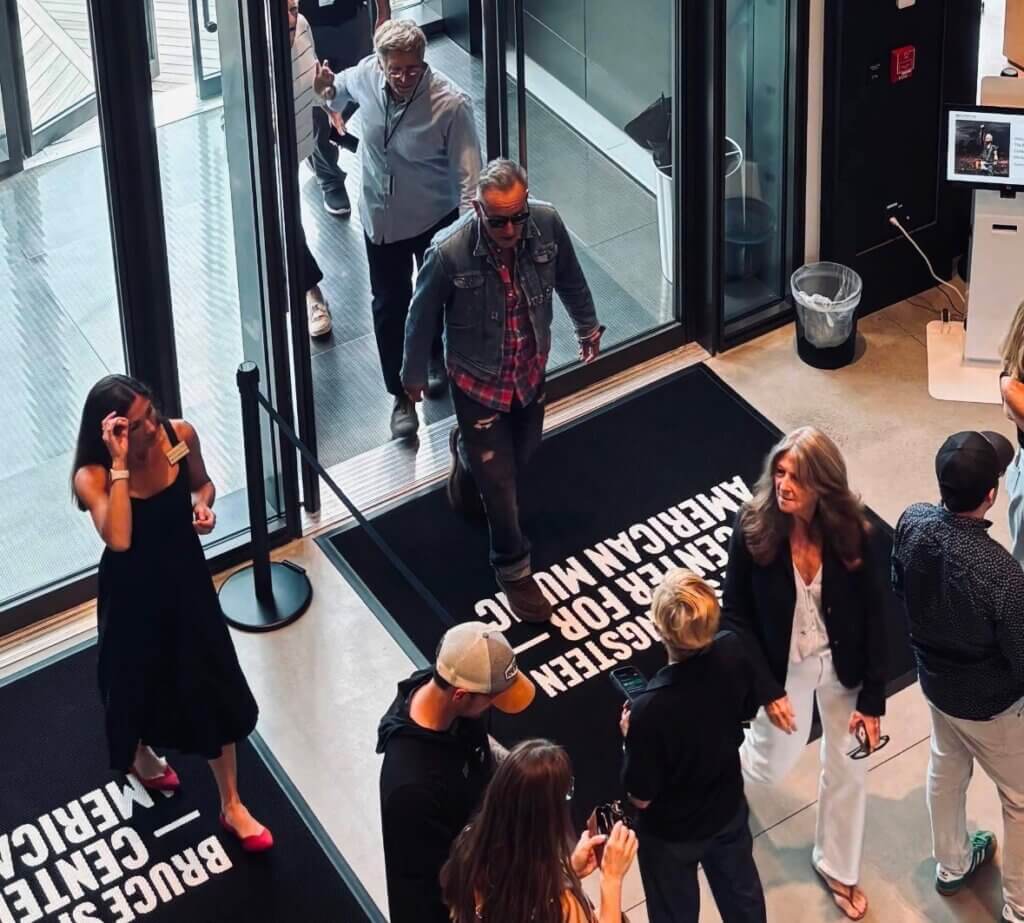
Maybe it will be a member of the E Street Band. We’ve welcomed musicians including Eddie Vedder and Tom Morello, along with countless artists, writers, photographers, producers, historians, and other people who have helped make and document the history we are here to preserve.
Today, we met David Uosikkinen, longtime drummer and founding member of Philadelphia’s own The Hooters.
David joined Eric Bazilian and Rob Hyman at the very beginning of The Hooters in 1980, helping create a band that would become an integral part of the Philadelphia music scene before breaking nationally with their 1985 album Nervous Night. Songs including “And We Danced,” “Day by Day,” and “All You Zombies” helped propel the band far beyond its hometown roots.
But one particular entry on David’s résumé connects directly to a particularly important moment in music history: Live Aid.
On July 13, 1985, musicians gathered on two sides of the Atlantic (at Wembley Stadium in London and John F. Kennedy Stadium in Philadelphia) for an enormous benefit concert organized to raise money and awareness in response to famine in Ethiopia. Nearly 100,000 people packed JFK Stadium, while television broadcasts carried the performances to audiences around the world. The Philadelphia bill included artists ranging from Madonna, Run-DMC, and Patti LaBelle to Hall & Oates, Mick Jagger, Tina Turner, and a reunited Led Zeppelin.
And who helped kick off the American side of it all?
The Hooters!
As hometown representatives of a city suddenly at the center of the musical universe, The Hooters were the first band to perform at the Philadelphia concert (though solo acts Bernard Watson and Joan Baez performed before them). David was behind the drum kit as they played “And We Danced” and “All You Zombies” before the massive JFK Stadium crowd.
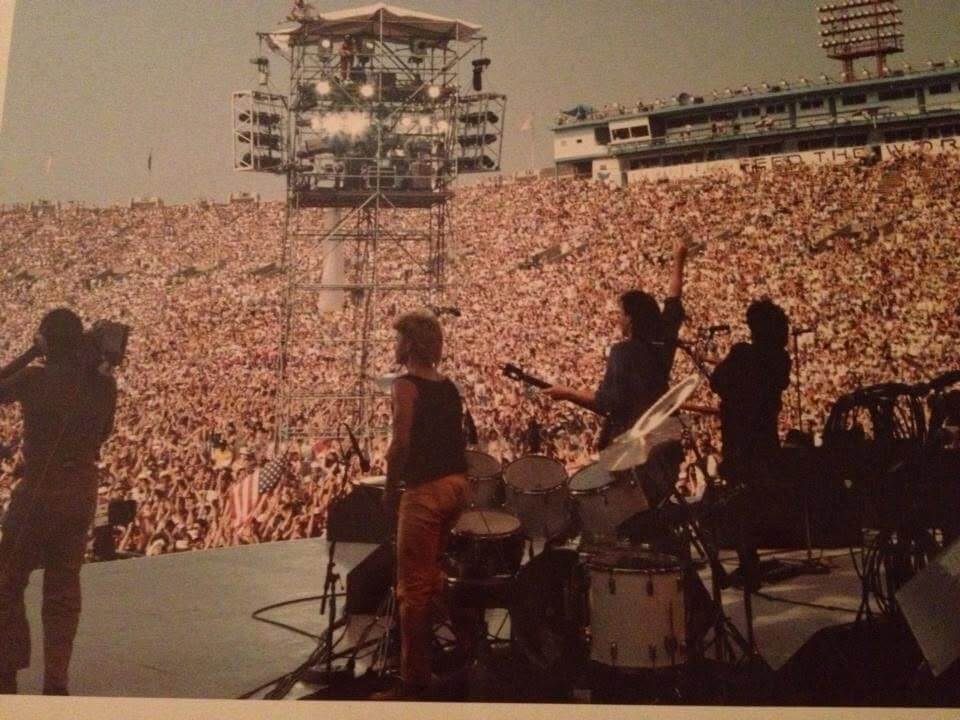
Courtesy Facebook
And there’s a fascinating footnote to David’s Live Aid performance. In-ear monitors were still years away from becoming commonplace on concert stages, but David used an early wired version at Live Aid. According to accounts of the concert’s groundbreaking sound production, The Hooters were the only act at the Philadelphia show using the technology, putting David quite literally on the leading edge of something musicians around the world now take for granted. (I may need to add this to the “Technology” exhibit in our Jon Landau American Music Gallery! But I digress…)
Live Aid has become one of those events that exists simultaneously as concert, cultural moment, technological feat, and historical artifact. Forty-one years later, we can watch the footage and see a remarkable lineup of famous faces. But having David standing in the Center today was a reminder that those famous images represent individual musicians with their own memories of what it felt like to be there.
And David’s story certainly didn’t end at JFK Stadium. The Hooters went on to tour internationally and perform at other landmark events, including Roger Waters’ The Wall in Berlin in 1990. David has also spent years celebrating his hometown’s musical heritage through David Uosikkinen’s In the Pocket, bringing together Philadelphia musicians to reinterpret songs with deep connections to the city.
Along the way, David has also influenced a generation of musicians, like Dave Grohl.
Stay with me for a sec: David began giving drum lessons to a young musician named Ilan Rubin when Rubin was only ten years old. Rubin went on to build quite a career and is now the drummer for the Foo Fighters. When the band played a surprise show at New Jersey’s Starland Ballroom this past May, Rubin brought his former teacher backstage and introduced David to Dave Grohl.
Grohl was psyched to realize that David was the drummer from The Hooters. As a teenager, he had seen David playing a yellow drum kit in a Hooters video on MTV. Grohl thought the kit was so cool that he wanted a yellow drum set of his own.
He got one, and that yellow drum kit would later be the one Grohl used to record Nirvana’s Nevermind.
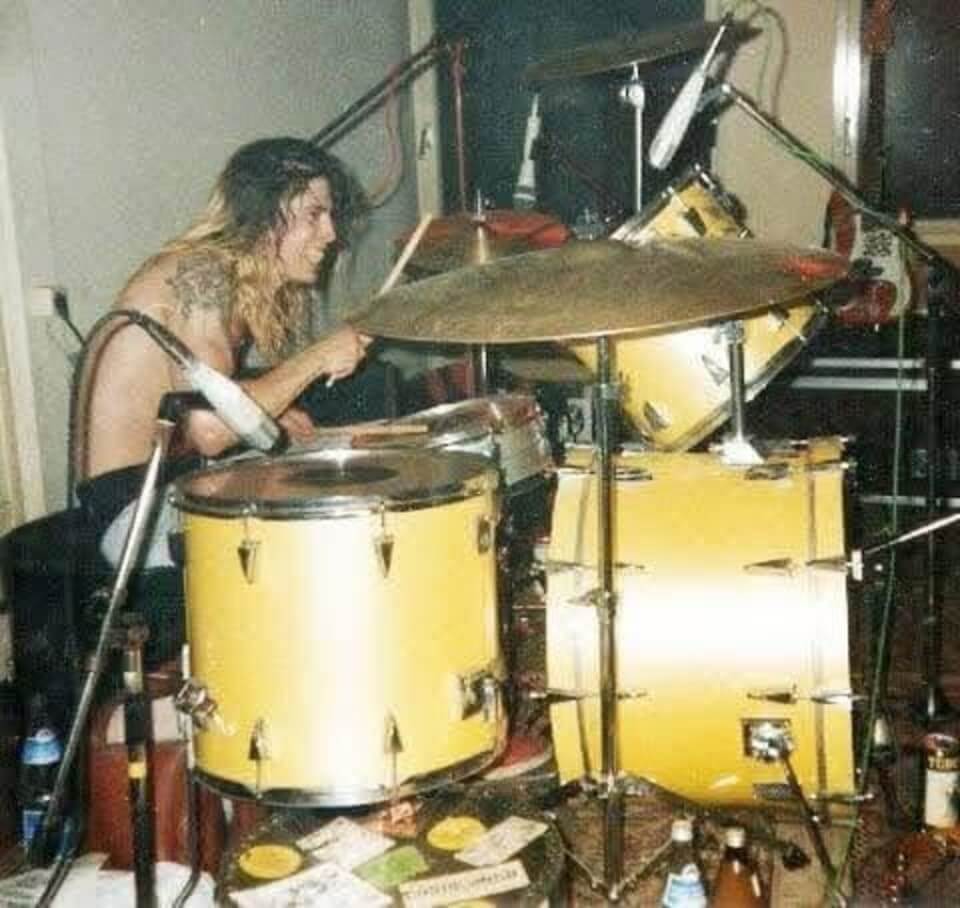
Courtesy Facebook
Just think about that for a moment! A young Dave Grohl watches David Uosikkinen on MTV. Something as simple as the color of David’s drums sticks with him. Years later, another yellow kit becomes part of the recording of one of the most consequential rock albums of the 1990s. Meanwhile, David teaches a ten-year-old Ilan Rubin, who decades later becomes the drummer for Foo Fighters, and ultimately brings David backstage to meet Grohl. Music history has a funny way of circling back on itself!
We try to demonstrate that here at the Center every day, from the moment you watch the film The Ties That Bind: Bruce Springsteen’s American Music Journey in our Powell Soundstage to start your visit. Music history isn’t really a neat succession of isolated artists, albums, genres, and events. It is people influencing other people: sometimes directly, sometimes indirectly, and sometimes without ever knowing that they did it. One musician hears another. One kid sees a drum kit on MTV. One teacher sits down with a ten-year-old student. The ripples keep moving outward.
Which made one last moment during today’s visit particularly appropriate.
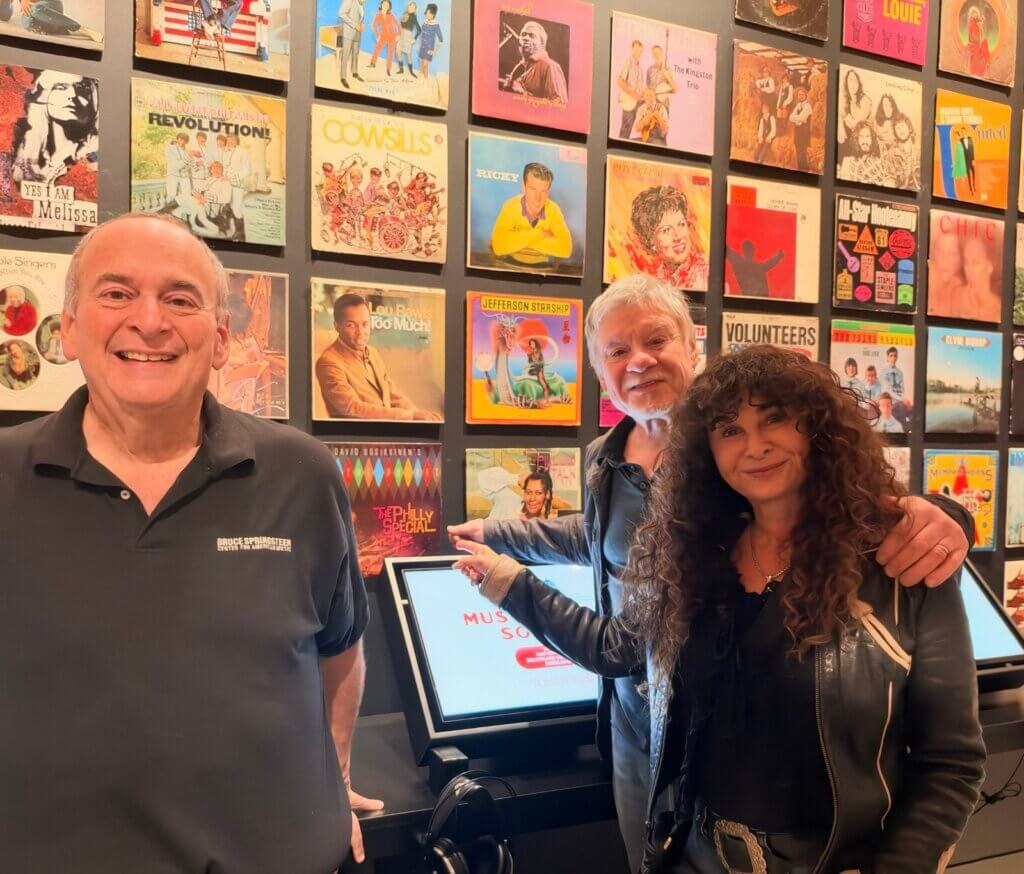
David and his wife Dallyn placed his album cover on the wall in our American Music Gallery!
Thanks to our stalwart volunteer, Stan Goldstein, for coordinating the trip. We can’t wait to see how the next generation of musicians coming through the Center on field trips will be influenced by the artists they encounter here, and where those ripples might travel next.
Melissa Kozlowski
Director of Curatorial Affairs
Bruce Springsteen Center for American Music
Monmouth University
November 1, 2026