
Press Kit
Public Opening | June 13, 2026 | Long Branch, New Jersey
Media contact: Tara Peters, tpeters@monmouth.edu
The Institution
- Full name
-
Bruce Springsteen Center for American Music
- Former name
-
Bruce Springsteen Archives and Center for American Music (renamed March 2026)
- Location
-
Located on the campus of Monmouth University
382 Cedar Ave.
Long Branch, NJ 07740(Note: Monmouth University is formally located in West Long Branch, New Jersey, but its campus also includes the City of Long Branch and the Township of Ocean. The Center sits on the area of campus located within the City of Long Branch.)
- Website
- Organizational status
-
Independent 501(c)(3) nonprofit
- Archival relationship established
-
2011 (formal archival repository designation: 2017)
- Mission Statement
-
The Bruce Springsteen Center for American Music preserves the legacy of Bruce Springsteen and celebrates the history of American music and its diversity of artists and genres.
- Boilerplate
-
The Bruce Springsteen Center for American Music preserves the legacy of Bruce Springsteen and celebrates the history of American music and its diversity of artists and genres. As the home of the Bruce Springsteen Archives, the Center serves as the official repository for materials related to Springsteen and the E Street Band, including photographs, historic memorabilia, oral histories, and more. The Center also explores American music more broadly by producing exhibitions, concerts, and educational programming that interprets and honors the cultural impact of American music past, present, and future.
Leadership
- Executive Director
-
Bob Santelli (founding)
- Director
-
Eileen Chapman
- Director of Curatorial Affairs
-
Melissa Kozlowski
- Board Chair
-
Monmouth University President Patrick F. Leahy, Ed.D.
The Collection & Exhibitions
- Archive scope
-
All genres of American music, including: folk, blues, gospel, country, hip-hop, jazz, Latin, Native American, rock, and pop
- Collection size
-
Nearly 48,000 items from 47 countries
- Materials types
-
Concert memorabilia, promotional materials, vinyl records, textiles, DVDs, oral histories, photographs, handwritten materials, and artifacts
- Galleries and exhibition layout
-
Ground floor: American music genres, histories, and artists
- American Music Gallery (2,200 square feet)
- Temporary exhibit gallery (2,200 square feet) — Inaugural exhibit: is Chimes of Freedom: Protest, Patriotism, and the Power of Song
- Bruce Springsteen at Monmouth University
- America’s Instrument: The Evolution of the Electric Guitar
- American Music Honors
Second floor: Bruce Springsteen and E Street Band exhibitions; Archives occupy large portion of second floor (4,226 square feet)
- The Education of Bruce Springsteen
- Bruce Springsteen Songwriter
- The Mongeluzzi Photo Gallery
- Behind the Music (In-Studio Room)
- In-Concert Room
- Opening documentary
-
The Ties That Bind: Bruce Springsteen’s American Music Journey, an introductory overview of the Center, narrated by Bruce Springsteen. Produced and directed by Thom Zimny
- Interactive experiences
-
More than a dozen immersive interactive experiences
- Research access
-
Available to amateur and professional scholars by appointment; contact the Center for access protocols
- Digitization status
-
Ongoing; remote access to some materials available
The Opening
- Grand Opening date
-
June 13, 2026
- Grand Opening events
-
Four concert events at Monmouth University May 29-June 5:
May 29 – America 250: A Jersey Shore Celebration of the Nation’s Music Heritage
June 3 – The Native American Music Experience
June 4 – Music America: The Songs that Shaped Us – Night One
June 5 – Music America: The Songs that Shaped Us – Night Two
- Ticket sales
-
Adult (18+) – $22
Senior (65+) – $20
Youth (7–17) – $16
Child (6 and under) – Free
Veteran (with valid Military ID) – $16
Active Military – Free
Monmouth University Student (verified ID) – Free - Hours of operation
-
Summer 2026 Hours:
Monday to Wednesday and Friday to Sunday 10 a.m. to 5 p.m.
Thursday 10 a.m. to 8 p.m. Open on July 4
- Annual visitor goal
-
45,000 to 50,000
Education & Programming
- Ongoing programming
-
Intimate concerts, symposia, lectures, film series, workshops, conferences
- K-12 access
-
Teacher workshops; school visits; online programs for classroom use
- TeachRock partnership
-
Curriculum integration initiative founded by Stevie Van Zandt; music-integrated K-12 lesson plans, teaching strategies, and online programs
- Student opportunities
-
Internships, research access, coursework integration for Monmouth University students
The Building
- Architect
-
COOKFOX Architects, New York, Lead: Richard A. Cook, founding partner. Access the architectural press kit
- General contractor
-
Torcon
- Exhibition & signage design
-
C&G Partners
- Building size
-
30,000 square feet
- Theatre
-
241-seat performance space designed to support a Dolby Atmos playback environment tailored for both cinematic and musical programming with Clair/Meyer Sound integration for live performances.
- Construction/campaign cost
-
Approximately $50 million; 100% externally donor-funded
- LEED certification
-
LEED v4 BD+C; first LEED-certified project on Monmouth’s campus
- Structure
-
Mass timber (sustainably harvested European glue-laminated and cross-laminated timber); all-electric building
- Exterior
-
Weathering steel rain screen panels; references New Jersey’s industrial legacy
- Landscape
-
LaGuardia Design Group; native plantings; bioswale stormwater management; London plane tree (symbolizing the tree outside Springsteen’s childhood home)
- Mechanical/climate
-
Dedicated Outdoor Air System (DOAS); hydronic radiant floor heating and cooling; museum-grade humidity control for archival preservation
- Accessibility consultant
-
KMA Architecture + Accessibility
- Full consultant team
-
Structural: DeSimone Consulting Engineers; Civil: Langan; Geo-Technical: French & Parrello Associates; Lighting: ONELux Studio; Acoustics: Longman Lindsey / Trinity Consultants; Theater: Harvey Marshall Berling Associates; Specifications: Long Green Specs
Media Contacts
- Primary media contact
-
Tara Peters, tpeters@monmouth.edu
- Media credentialing
-
Contact Tara Peters for credentialing details, access schedules, and filming guidelines
- Marketing & social media contact
-
Annalaan LeMay, alemay@springsteencenter.org
- Center website
The Bruce Springsteen Center for American Music is a cultural and educational center at Monmouth University. It preserves the legacy of Bruce Springsteen and the E Street Band while exploring the broader story of American music through exhibitions, concerts, and educational programs.
The Bruce Springsteen Center for American Music preserves the legacy of Bruce Springsteen and celebrates the history of American music and its diversity of artists and genres.
The new 30,000-square-foot building, designed by COOKFOX Architects will include exhibition galleries, research space, and a 241-seat soundstage.
The Bruce Springsteen Center for AmericanMusic develops traveling and in-house exhibitions and presents concerts, educational programs, and public events that explore American music and culture as well as Bruce Springsteen’s legacy. The new building has roughly 10,000 square feet of exhibition gallery space. The space includes a temporary exhibit gallery that will change biannually, and permanent exhibit galleries that focus on American Music, Bruce Springsteen’s legacy and the E Street Band.
The exhibit design is immersive and experiential, featuring rare artifacts, interactive experiences, iconic photography, a hands-on rehearsal studio, and an immersive concert experience. Artifacts include famous instruments, garments worn on stage, handwritten lyric notebooks, set lists, alternate album covers, early concert posters, and more.
As an educational hub, the Center is open to students, scholars, and the public, with lectures, symposia, live performances, and other programming planned.
The Bruce Springsteen Center for American Music opens to the public on Saturday, June 13, 2026.
The Bruce Springsteen Center for American Music is open Monday to Wednesday and Friday to Sunday 10 a.m. to 5 p.m. Thursday hours are 10 a.m. to 8 p.m.
Yes. All visitors will require a ticket for entry. The Center will utilize a timed ticketing structure to ensure a comfortable and engaging experience for everyone.
Timed ticketing means you select a specific entry time when purchasing your ticket. This helps manage capacity and avoids overcrowding.
Tickets may be purchased online at springsteencenter.org/tickets.
Researchers and select visitors will have the opportunity to enhance their experience with a free Archives visit. This intimate offering allows guests to explore digital copies of rare materials from our collection and gain deeper insight into the stories behind the music. Capacity is limited.
Select digitized materials will be available online as the digital archive expands. Some items will always require an in-person visit due to rights or handling restrictions.
Visitors can expect expanded exhibitions, live performances, educational programming, and digital offerings when the new facility opens in 2026. The Center will also continue to host the American Music Honors.
American Music Honors is one of the Center’s signature events. Held annually since 2023, American Music Honors celebrates artists who have demonstrated artistic excellence, creative integrity, and a longstanding commitment to the value of music in our national consciousness. The Center has recognized artists such as Jackson Browne, Dr. Dre, John Mellencamp, Tom Morello, Mavis Staples, Dionne Warwick, and more.
The Center’s beginnings date back to 2001 as a fan-led effort called the Bruce Springsteen Special Collection to preserve early articles, photographs, and memorabilia and make them accessible to fans and researchers.
Read more: Becoming the Bruce Springsteen Archives & Center for American Music
The collection was first housed at the Asbury Park (NJ) Public Library, where it grew from a small closet into larger storage areas before outgrowing the space.
The collection moved to Monmouth University in 2011. Volunteers relocated thousands of items and the Archives began welcoming researchers, students, and fans.
Monmouth University and Bruce Springsteen announced a collaborative partnership to establish The Bruce Springsteen Archives and Center for American Music at Monmouth University on January 10, 2017 during “A Conversation with Bruce Springsteen,” held in the University’s Pollak Theatre. Through the collaboration, the University became the official archival repository for Springsteen’s written works, photographs, periodicals, and artifacts. At the outset of the partnership, Eileen Chapman was promoted to director of the Bruce Springsteen Archives. In October 2022, Bob Santelli was named executive director of the Bruce Springsteen Archives & Center for American Music.
Monmouth University, located in West Long Branch, New Jersey, has played an important role in Bruce Springsteen’s music history. The University was the site of many early Springsteen concerts from 1969 to 1974, and is located just minutes away from where, in 1974, Springsteen wrote his most famous song, “Born to Run.” The University has hosted numerous Springsteen academic conferences over the years, and he has participated in numerous music-related public programs on campus. Beyond that, Monmouth is a national university that sits at the heart of the Jersey Shore—the literal and figurative birthplace of Bruce Springsteen.
From a practical perspective, universities offer things standalone cultural institutions struggle to sustain: archival infrastructure, curatorial expertise, academic peer review, student labor and research energy, and long-term institutional continuity. The Center benefits from Monmouth’s library and archival systems, its faculty expertise in history, music, communications, and education, and its ability to integrate the collection into coursework, internships, and research.
The Center is structured as an independent 501(c)(3) nonprofit organization. It has its own governance, leadership, and mission distinct from Monmouth University’s academic administration. The university provides the campus home and certain shared infrastructure; the Center operates its programs, exhibitions, and public engagement independently. This structure is common among university-affiliated cultural institutions — it allows the Center to pursue partnerships, fundraising, and programming on its own terms while benefiting from the university’s long-term institutional stability.
The Center is a 501(c)(3) nonprofit organization that raises funds to support both its capital project and ongoing operations. It is funded through contributions from third-party donors and does not receive financial support from Monmouth University or Bruce Springsteen. The $50 million building project was funded entirely through external philanthropic support.
2001
Bruce Springsteen fans organize a campaign to collect and preserve historic articles, photographs, and memorabilia related to Bruce’s career. The Bruce Springsteen Special Collection is established.
2011
Monmouth University takes possession of the Bruce Springsteen Special Collection after it outgrows its home at the Asbury Park Public Library.
2017
Monmouth University and Bruce Springsteen announce a collaborative partnership to establish The Bruce Springsteen Archives and Center for American Music at Monmouth University, expanding beyond Springsteen to encompass all genres of American music. Through the collaboration, the University becomes the official archival repository for Springsteen’s written works, photographs, periodicals, and artifacts. The Center’s nonprofit structure is established and leadership team assembled.
2023
The Bruce Springsteen Archives and Center for American Music at Monmouth University announces plans to build a new 30,000 square foot building to house the Archives, the Center for American Music, related exhibition galleries, and a 241-seat, state-of-the-art performance space.
2024
Construction of the new building begins on the Monmouth University campus.
2025
Construction continues; exhibition design begins.
March 2026
Formal renaming: Bruce Springsteen Center for American Music
May 29, 2026
Grand Opening celebration begins with America 250: A Jersey Shore Celebration of the Nation’s Music Heritage, the first of five public events featuring nationally recognized artists and performers.
June 3, 2026
The Native American Music Experience presented as part of Grand Opening programming.
June 4–5, 2026
Grand Opening events continue with Music America: The Songs that Shaped Us, two nights of concerts celebrating the national commemoration of America’s semiquincentennial.
June 13, 2026
The Bruce Springsteen Center for American Music opens officially to the public.
Read more: Becoming the Bruce Springsteen Archives & Center for American Music
A quick-reference briefing for reporters on deadline.
1. It opens June 13, 2026.
The Bruce Springsteen Center for American Music opens to the public on June 13, 2026, on the campus of Monmouth University in Long Branch, New Jersey. A week of events precedes the grand opening, beginning May 29.
2. It’s bigger than Bruce. The Center is about American music.
The Center bears Bruce Springsteen’s name, but its mission is deliberately broader. Folk, blues, gospel, country, hip-hop, jazz, Latin, and Native American musical traditions are all part of what the Center collects, teaches, and exhibits. Springsteen himself has described American music as a shared inheritance — one that crosses race, region, and generation. The Center’s scope is the institutional expression of that idea.
3. This collection has been building for more than 25 years.
In 2001, Bruce Springsteen fans organized a campaign to collect and preserve historic articles, photographs, and memorabilia related to Bruce’s career giving rise to The Bruce Springsteen Special Collection. The collection came to Monmouth University in 2011 and the Bruce Springsteen Archives and Center for American Music at Monmouth University was established in 2017, expanding beyond Springsteen to encompass all genres of American music. What opens June 13 is the culmination of more than 25 years of collection-building, fundraising, planning, and construction — not a new idea, but a long-developing institution finally with a permanent home.
4. The building is new — and purpose-built.
The Center’s home is a new building designed by COOKFOX Architects, the New York firm known for contextually sensitive, sustainability-focused design. The building includes public exhibition galleries, a performance auditorium, dedicated archival storage, and research spaces — each with different environmental and design requirements.
5. This is a working archive, not just a museum.
The Center holds significant primary-source materials — handwritten lyrics, photographs, performance documents, recordings — and makes them accessible to researchers. It is as much a scholarly institution as a public one. Researchers can request archive access; the collection is actively cataloged and growing.
6. It sits on a university campus but operates independently.
The Center is an independent 501(c)(3) nonprofit. It has its own leadership and governance separate from Monmouth University’s academic administration. The university provides the campus home; the Center directs its own programming, partnerships, and public mission.
7. Education is central — not supplemental.
While the Center has its own education department and a dedicated, experienced museum educator, it also benefits from a partnership with TeachRock, the education initiative founded by Stevie Van Zandt. TeachRock brings music-integrated curriculum and professional development opportunities to K–12 teachers and students.
The Center likewise serves as a resource for Monmouth University students through internships, research opportunities, and coursework. Education is woven into the institution’s DNA—it is not simply an add-on, but a core part of its mission.
8. The timing is fortuitous.
The Center opens in 2026 — the year of America’s 250th anniversary. Its leadership has described American music as one of the nation’s most honest self-portraits. The opening invites a national conversation about what American music reveals about American identity, history, and aspiration.
9. The Jersey Shore is the setting — and the argument.
The Center is located at the corner of Cedar and Norwood Avenues on the Monmouth University campus—just minutes away from where Bruce Springsteen wrote Born to Run. It sits in the heart of the region that produced Springsteen, Jon Bon Jovi, and many others who shaped the American popular soundtrack. The Center argues, with archival evidence, that place has always mattered in American music, and that the Shore’s contribution to that story is underacknowledged.
10. Key contacts for reporters are available.
Bob Santelli (founding executive director), Eileen Chapman (director), and Melissa Kozlowski (director of curatorial affairs) are the Center’s primary spokespersons. Contact Tara Peters for interview requests.
The following spokespersons are available for interviews. All interview requests should be coordinated through Tara Peters, tpeters@monmouth.edu.
| Name | Title/Role | Areas of Expertise | Best For |
| Bob Santelli | Executive Director | Entertainment, culture, music history, Springsteen, American music broadly, institutional mission | Entertainment, culture, music, features |
| Eileen Chapman | Director | Day-to-day operations, programs, collections, acquisitions | General assignment, Bruce Springsteen Archives, Jersey Shore music history and culture, Programs |
| Melissa Kozlowski | Director of Curatorial Affairs | Archive, primary sources, Jersey Shore music history, research access | Education, history, archives, features |
| Patrick F. Leahy, Ed.D. | Board Chair, Monmouth University President | Leadership, higher education, institutional context, campus-community relationship, student impact | Education, policy, business, features, regional, general assignment |
| Rick Cook | Lead Architect | Building design, sustainability, LEED credentials, material and siting decisions | Architecture, design, sustainability |
| Jonathan Alger | Managing Partner and Co-founder, C&G Partners, Exhibition Designers | Gallery design, interpretive themes, exhibition curation | Arts, culture, design |
| Select Monmouth University Faculty | Subject Experts | American history, music industry, public history, museum studies, race and culture | Education, academic, features |
A note on Bruce Springsteen interview requests:
The Center cannot grant requests for interviews with or statements from Bruce Springsteen, but the Center will coordinate those requests with Springsteen’s publicist.
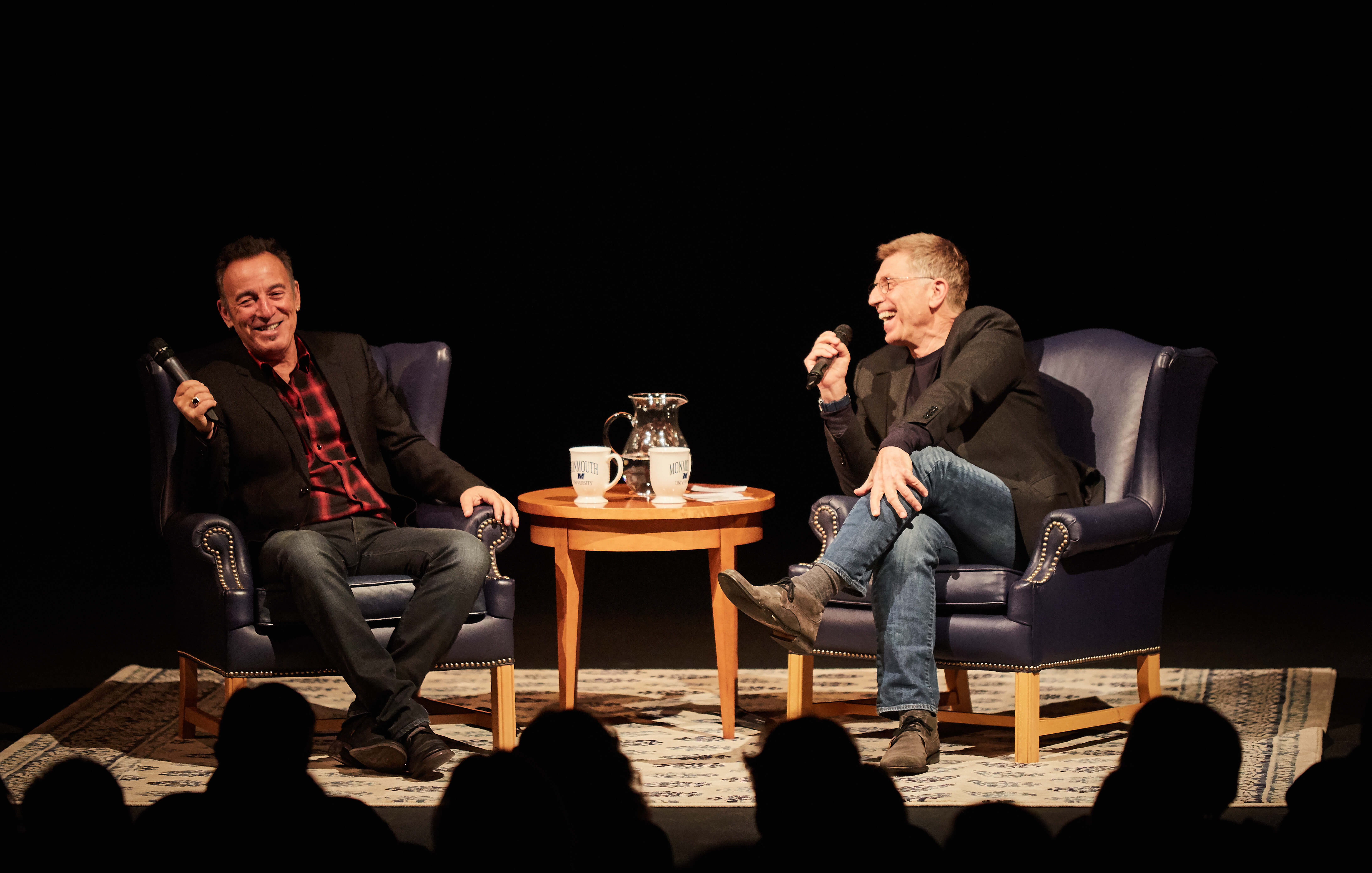
Photo credit: Danny Clinch.
Photo credit: Monmouth University
Photo credit: Bruce Springsteen Center for American Music

Photo credit: Monmouth University

Photo credit: Monmouth University.

Photo credit: Monmouth University.

Photo credit: Monmouth University.
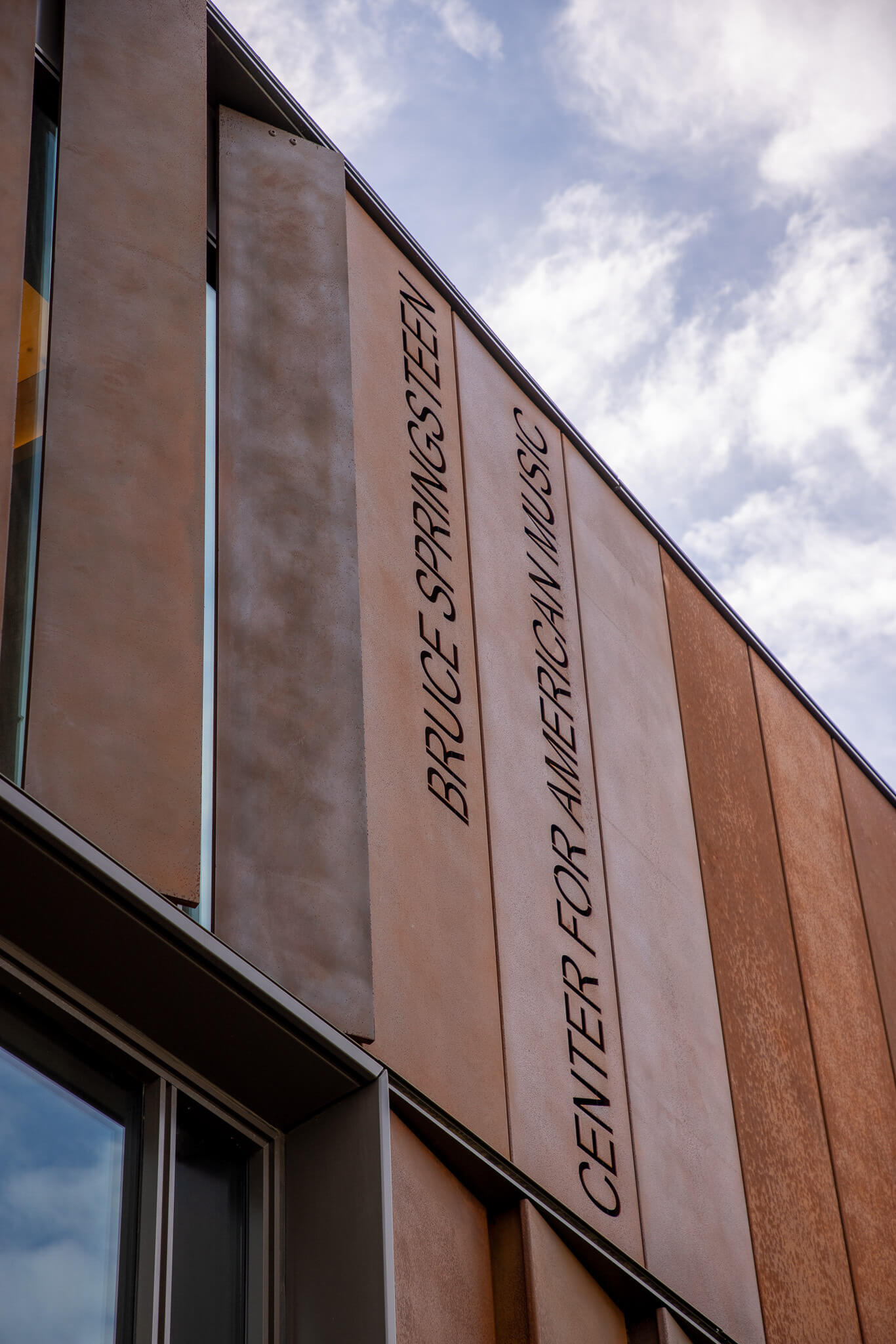
Photo credit: Monmouth University
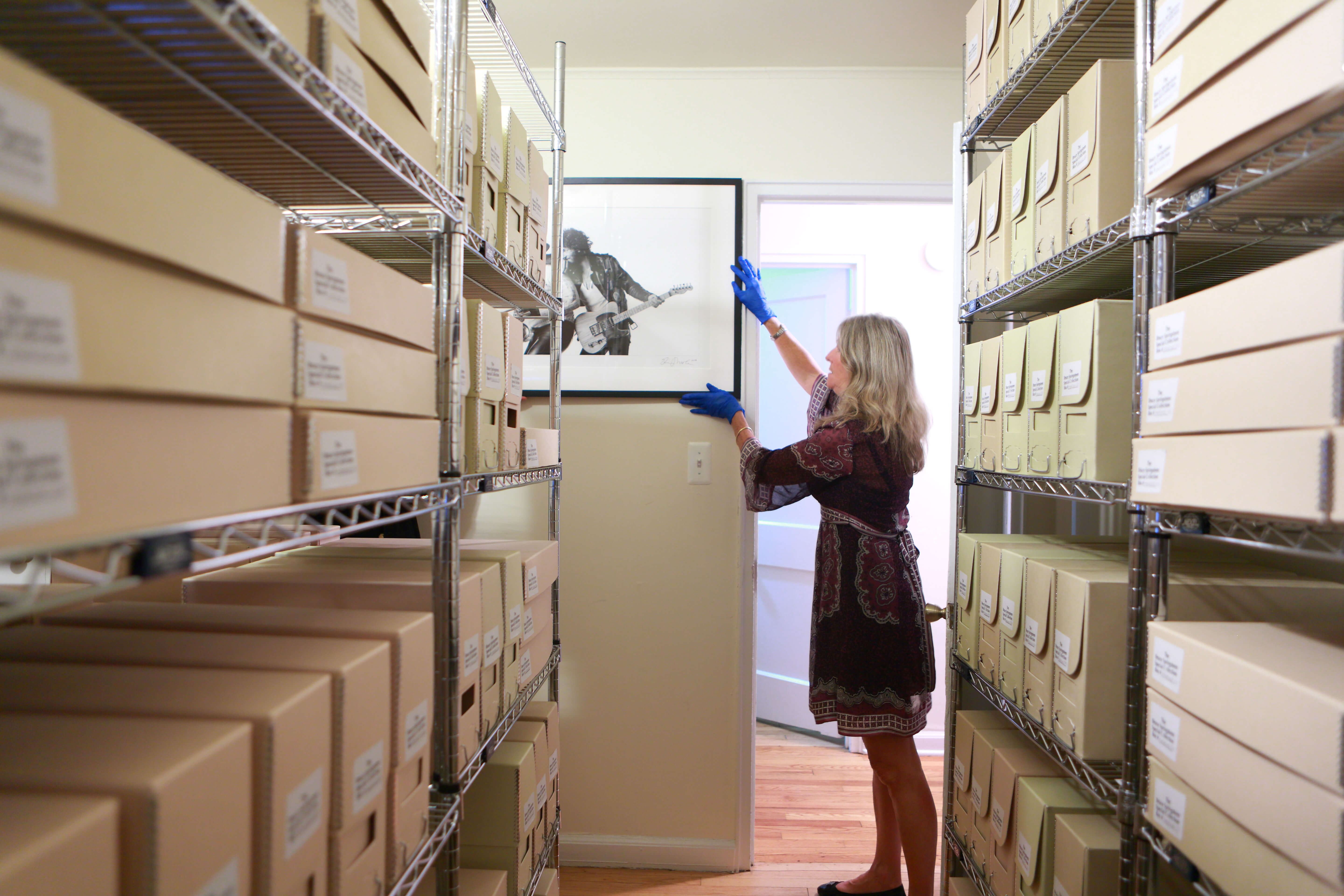
Photo credit: Peter Olson
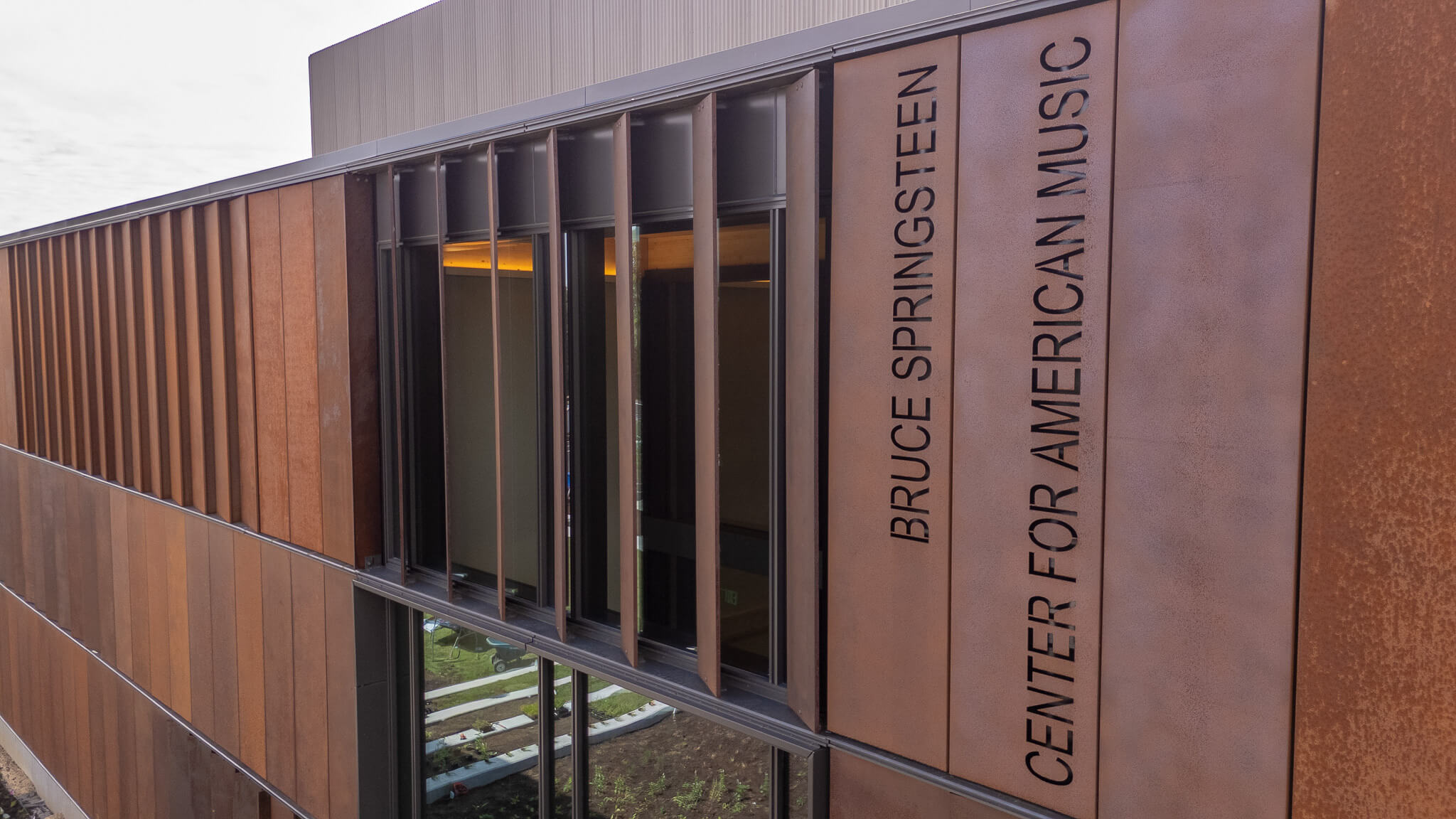
Photo credit: Monmouth University
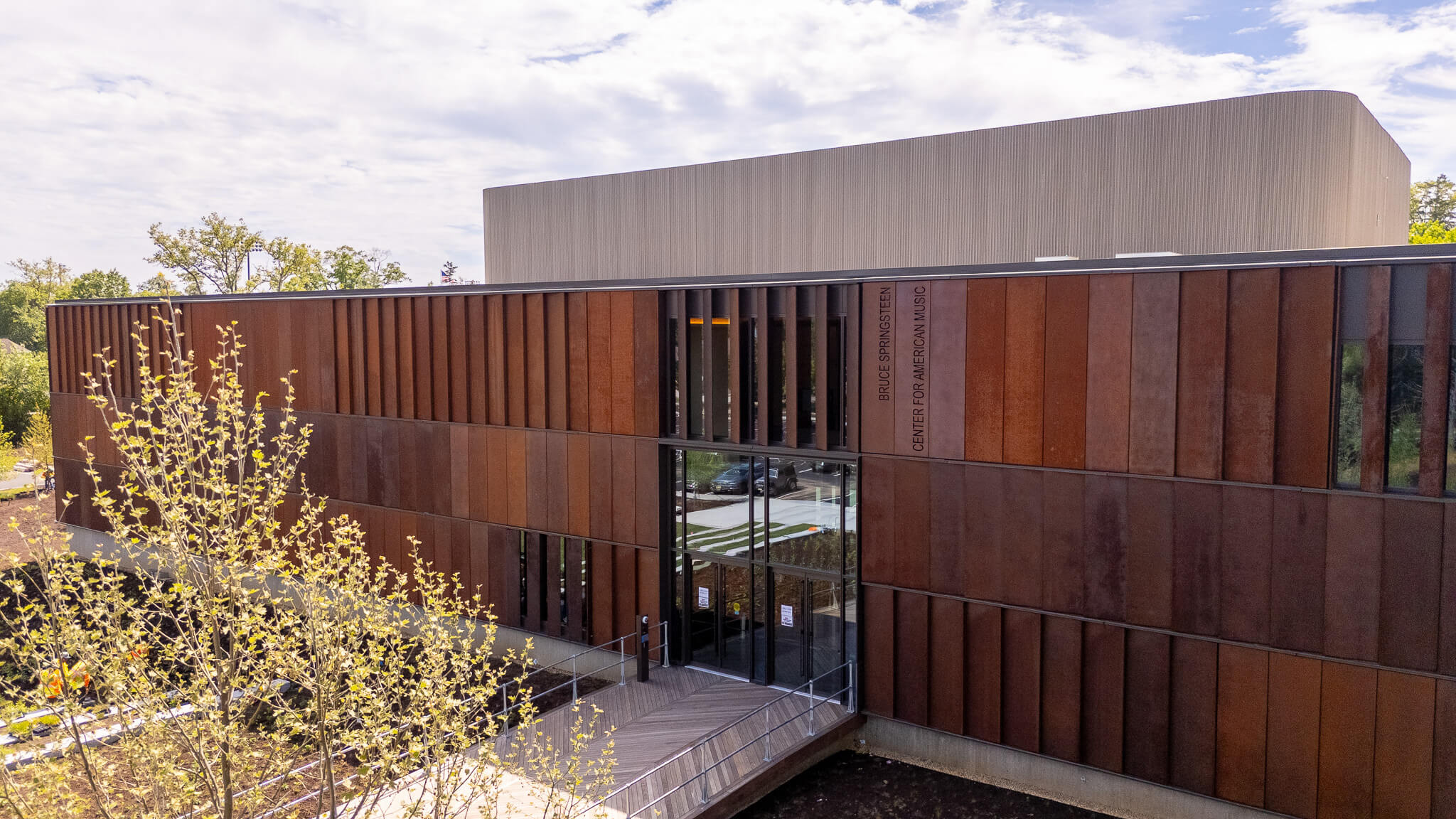
Photo credit: Monmouth University
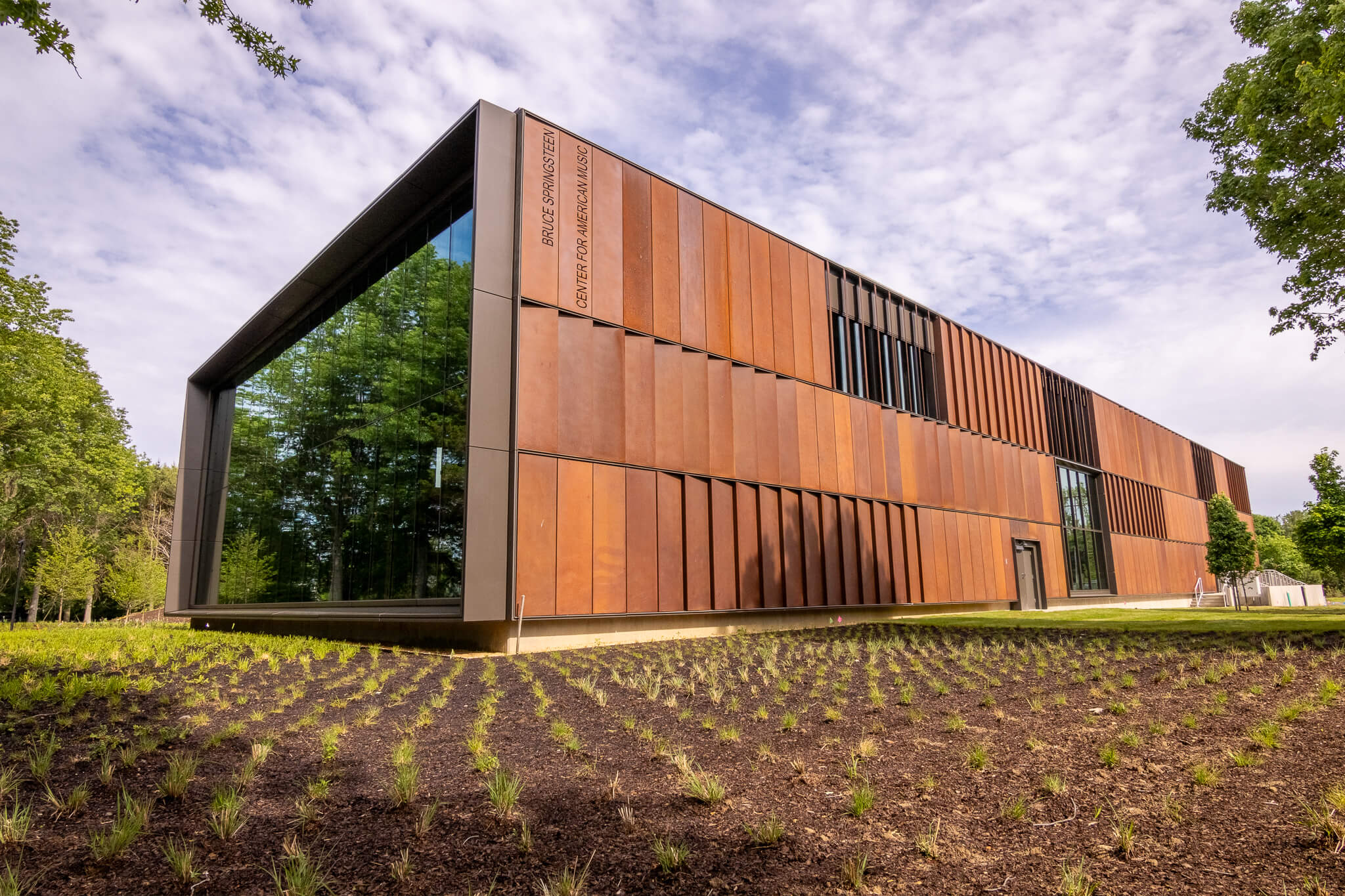
Photo credit: Monmouth University
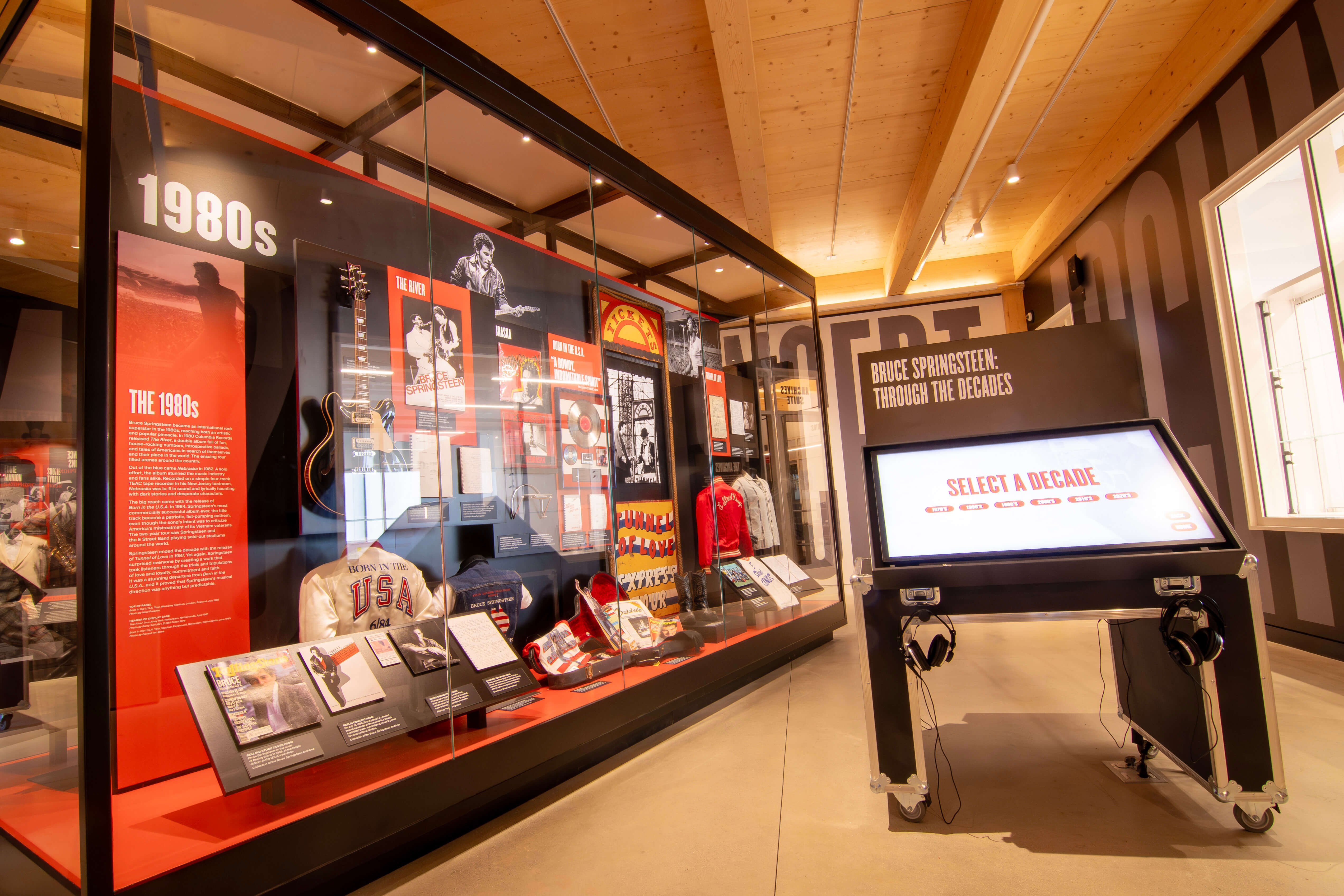
Photo credit: Monmouth University
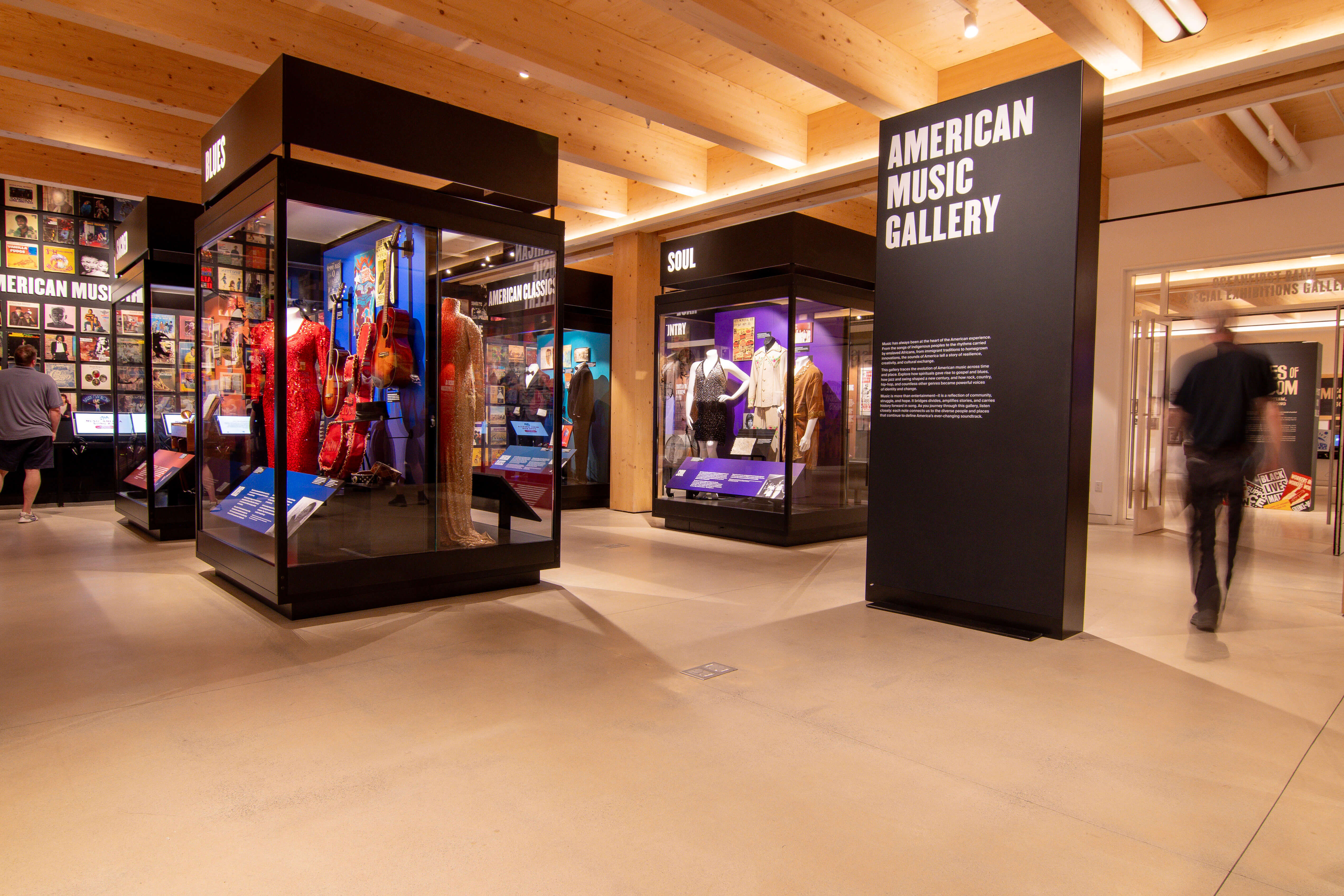
Photo credit: Monmouth University
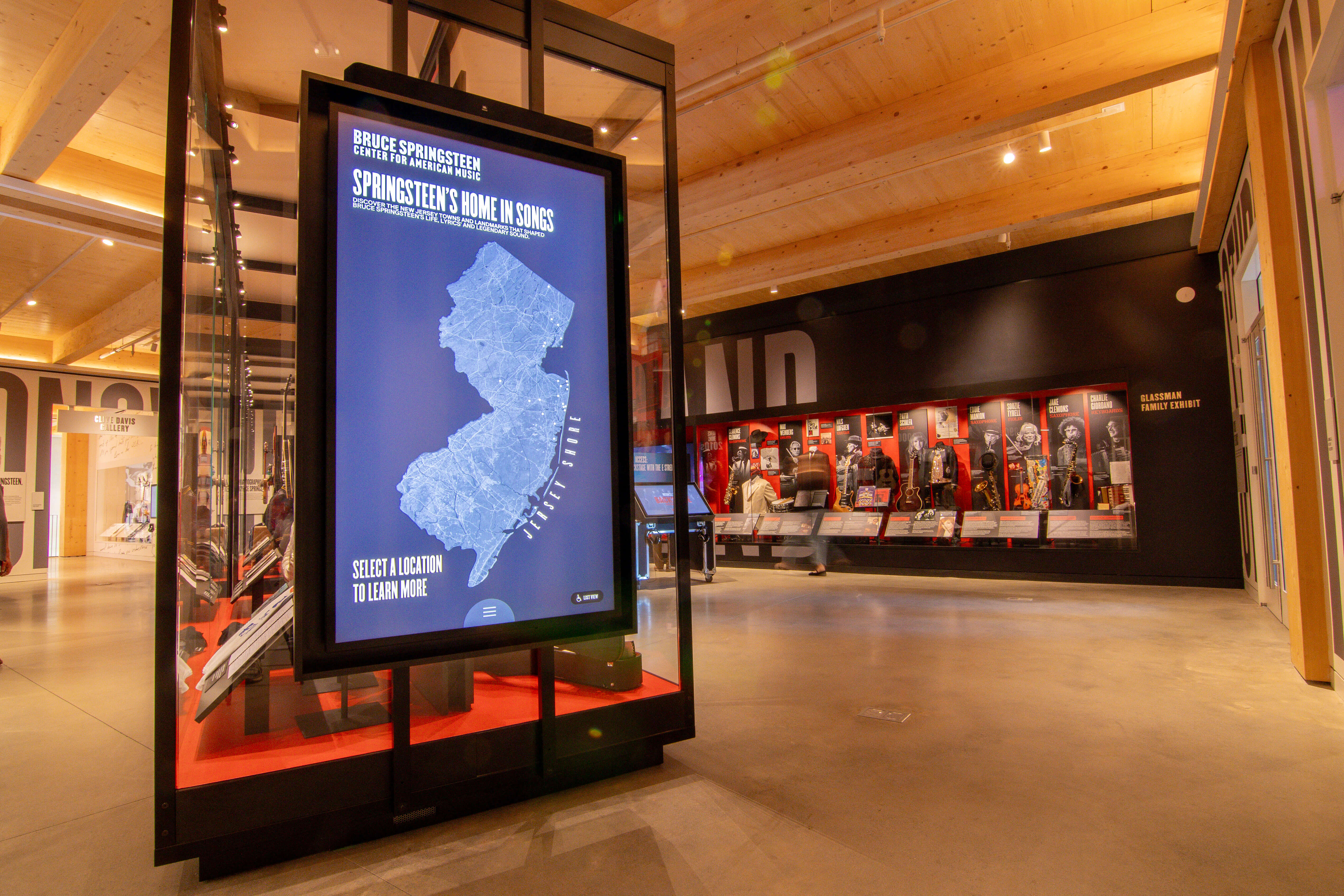
Photo credit: Monmouth University
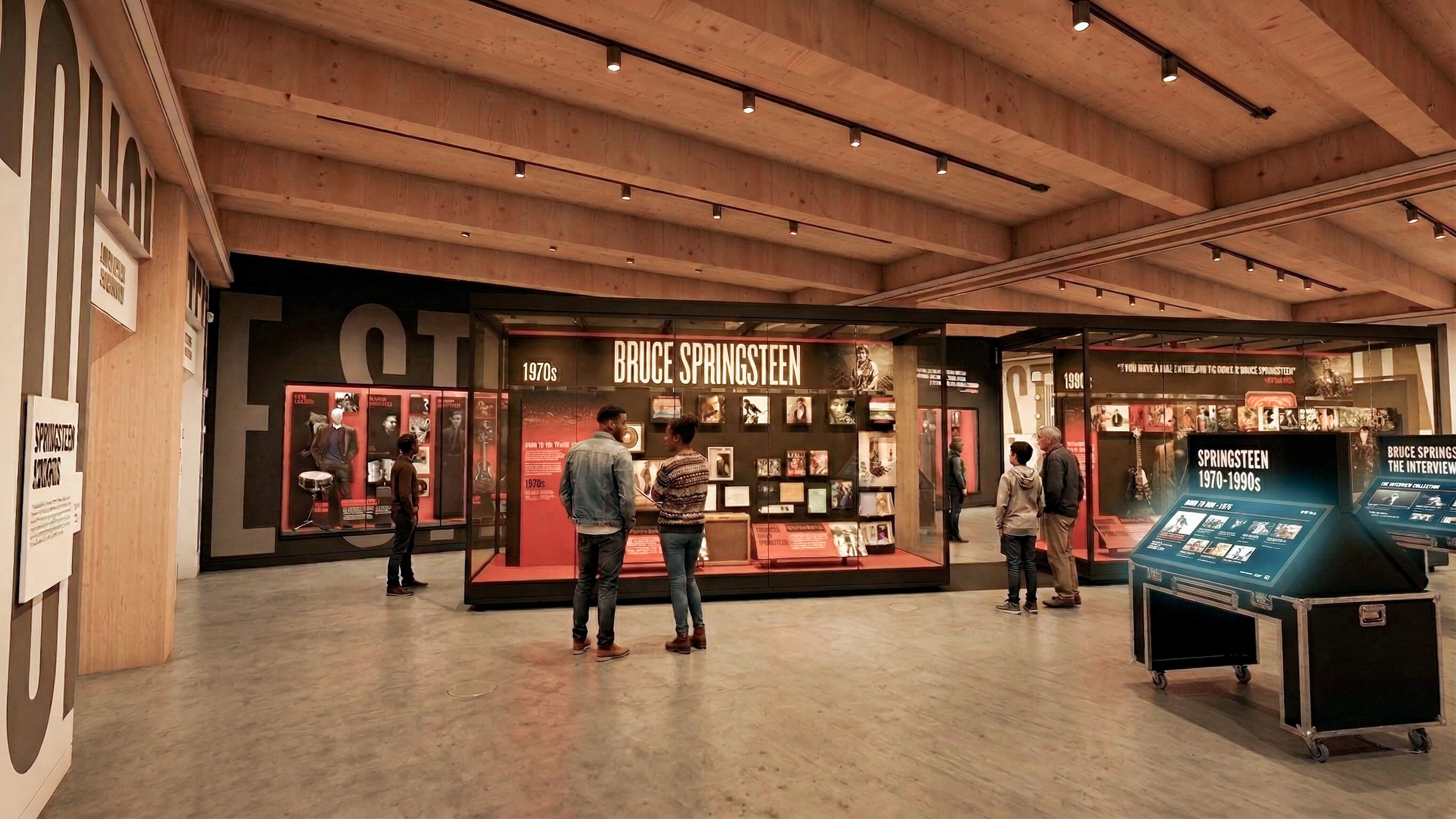
Credit: C&G Partners LLC
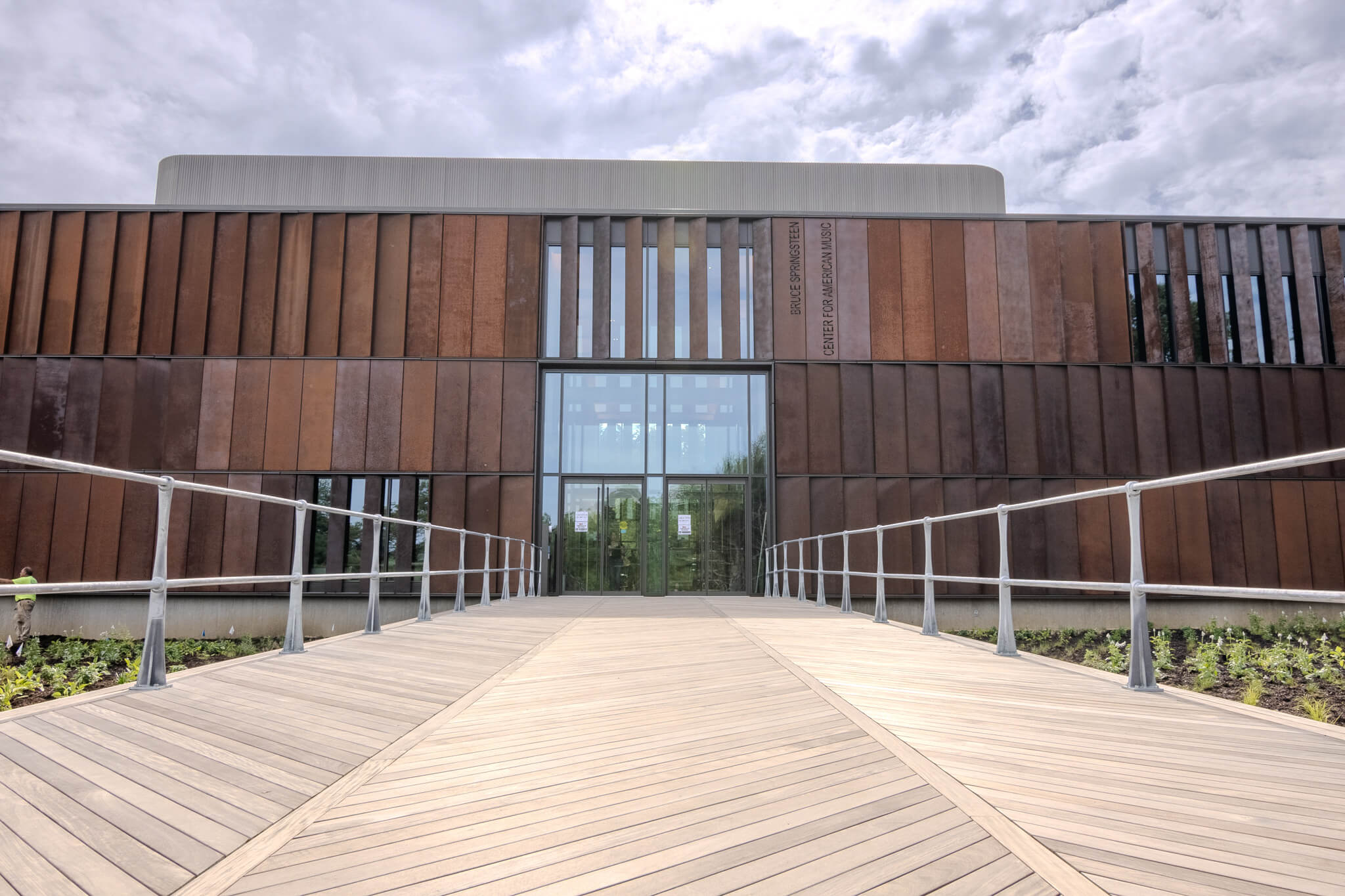
Photo credit: Monmouth University
Credit: COOKFOX Architects
Credit: COOKFOX Architects
For broadcast journalists, anchors, and reporters
Phonetic spellings below use plain-language approximations rather than IPA notation. Stressed syllables are indicated in ALL CAPS.
People
| Name / Term | Pronunciation | Notes |
| Bruce Springsteen | BROOSS SPRING-steen | Rhymes with ‘spring clean.’ Not ‘Spring-STEEN.’ |
| Bob Santelli | Bob san-TEL-ee | Italian surname; three syllables. |
| Eileen Chapman | eye-LEEN CHAP-man | Standard English pronunciation. |
| Melissa Kozlowski | meh-LIS-ah kuhz-LOW-skee | Polish surname; three syllables. LOW rhymes with how. |
| Stevie Van Zandt | STEE-vee van ZANDT | The ‘dt’ ending is silent; rhymes with ‘banned.’ |
| Jon Bon Jovi | JON BON JOH-vee | Italian surname origin; |
Places
| Name / Term | Pronunciation | Notes |
| Monmouth University | MON-muth yoo-NIV-er-sih-tee | First syllable rhymes with ‘don.’ Not ‘MON-mouth.’ |
| Pollak Theatre | PAH-luck THEE-ter | Not PAH-lack, not POWE-lack |
| West Long Branch | WEST LAWNG BRANCH | Standard New Jersey pronunciation. |
| Asbury Park | AZ-beh-ree PARK | Three syllables; stress on first syllable. |
Organizations & Programs
| Name / Term | Pronunciation | Notes |
| C&G Partners | SEE and JEE PART-nerz | Refer to by full name on first reference. |
| COOKFOX Architects | COOK-fox AR-kih-tects | Two words; no unusual pronunciation challenges. |
| TeachRock | TEECH-rock | One word; two syllables. No pause between ‘Teach’ and ‘Rock.’ |
| Torcon | TOR-kahn | Two syllables. Rhymes with ‘more’+ ‘con’ |
For additional pronunciation questions, contact Tara Peters at tpeters@monmouth.edu