How a new generation of musicians is moving beyond the concert stage to lead community change from the ground up.
At the Bruce Springsteen Center for American Music, our special exhibition Chimes of Freedom: Protest, Patriotism, and the Power of Song examines more than two centuries of music driving social change. But the story of music’s relationship to public life didn’t end in the 20th century. Today’s musicians are finding innovative ways to blend creative expression with community leadership.
I recently sat down with Elizabeth Stookey Sunde, Co-Founder and Executive Director of Music to Life, to discuss how her organization equips artists with the entrepreneurial tools, strategic mentorship, and business skills needed to turn social passion into sustainable community action.
Can you tell our readers a bit about your background, what inspired you to establish Music to Life, and the specific gap you set out to fill?
I grew up immersed in the 1960s folk movement, watching music regularly rally hearts, fill streets, and elevate civil rights and anti-war movements. I saw firsthand how a song could unify a crowd and shine a bright spotlight on injustice.
However, as I moved into the nonprofit and community development sector, I began noticing a critical gap. Songs are incredible at raising awareness, but awareness alone doesn’t build a community garden, fix a broken school music program, or establish a mental health initiative.
When my father, Noel Paul Stookey (of Peter, Paul & Mary), and I founded Music to Life, we asked a fundamental question: What if we treated musicians not just as performers who write anthems, march at the rallies and play benefits, but as civic leaders and social entrepreneurs capable of solving root-cause community problems?
We realized that while artists have endless passion and deep community trust, they rarely get trained in program design, budgeting, grant writing, or cross-sector partnerships. We built Music to Life to fill that exact gap – equipping musicians with the business skills, incubator training, and funding pathways needed to build sustainable community initiatives.
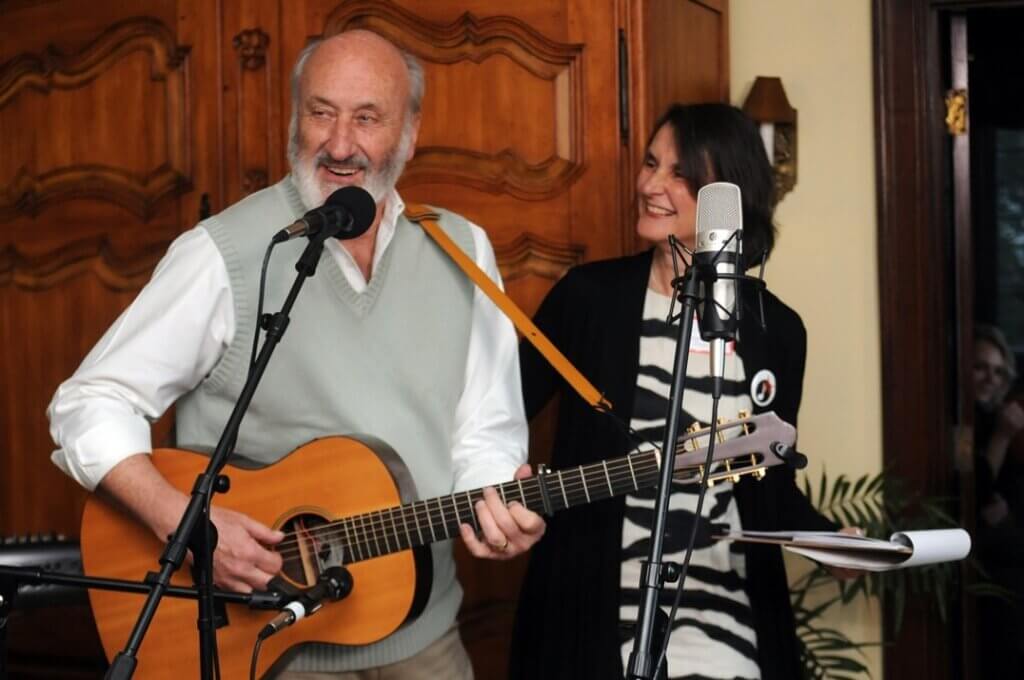
Music to Life Co-Founders Liz Stookey Sunde and Noel Paul Stookey bridging generations of musician-driven activism.
Many artists featured in Chimes of Freedom used music to raise awareness from the stage. Music to Life encourages artists to take that a step further with localized initiatives. How do those two approaches complement each other? And what historical movements inspired this shift?
They are two sides of the same coin. The stage performance – the anthem sung on a picket line or at a stadium rally – is the spark. It wakes people up, builds empathy, and creates a shared sense of identity. That history, from the Freedom Singers of the Civil Rights movement to Pete Seeger’s environmental crusade on the Hudson River, is in our DNA.
Where we step in is helping artists turn that initial spark into lasting infrastructure. Raising awareness gets people caring about food insecurity or youth mental health; social entrepreneurship gives the artist the structure to actually launch a cultural preservation initiative or a music-based healing program in local clinics.
The historical movements that influence us most are those where culture was deeply woven into daily community survival – like the Highlander Folk School during the Civil Rights era, where music was taught alongside organizing strategy and voter literacy. We see our work as continuing that tradition for the modern era.
When working across diverse genres and regions, what qualities do you look for in participating artists? Can you share an example of a Music to Life artist making a tangible impact beyond the stage?
We don’t judge artists by their genre, stream counts, or name recognition. We look for deep community connection, empathy, and coachability. We look for “musician changemakers” – artists who are already trusted local figures and are eager to learn how to design structured, measurable community programs.
Through our Musician Changemaker Accelerator (MCA) Academy, we walk these artists through business planning, stakeholder engagement, and impact tracking.
For example, there’s Beny Esguerra, one of our Academy graduates who recognized how systemic trauma and lack of creative outlets were affecting youth in their city. He created Wheel it Studios in response: A mobile recording project for underserved youth artists outside of Toronto connecting them with peer mentors, mental health resources, and real-world technical skills. The program has served hundreds of youth over the years and has demonstrably reduced street-related tensions and violence in the area; plus Beny has generated more than $50K in cash and other resources to support himself and the program.
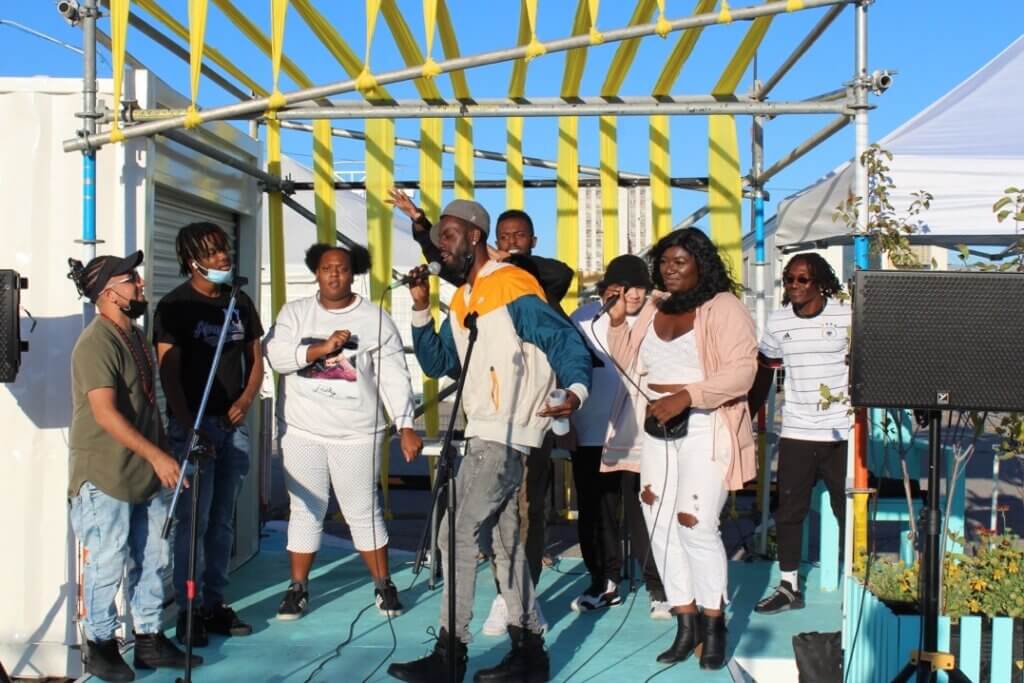
Participants from MCA Graduate, Beny Esguerra’s project, Wheel it Studios
Another Academy graduate, Elexa Dawson from Emporia, Kansas, used the Academy to build a regional program connecting local farm sustainability with food access, using neighborhood concerts as entry points for nutrition education and fresh food distribution. She’s successfully secured partnerships among the arts and agricultural community and more than $40K in support.
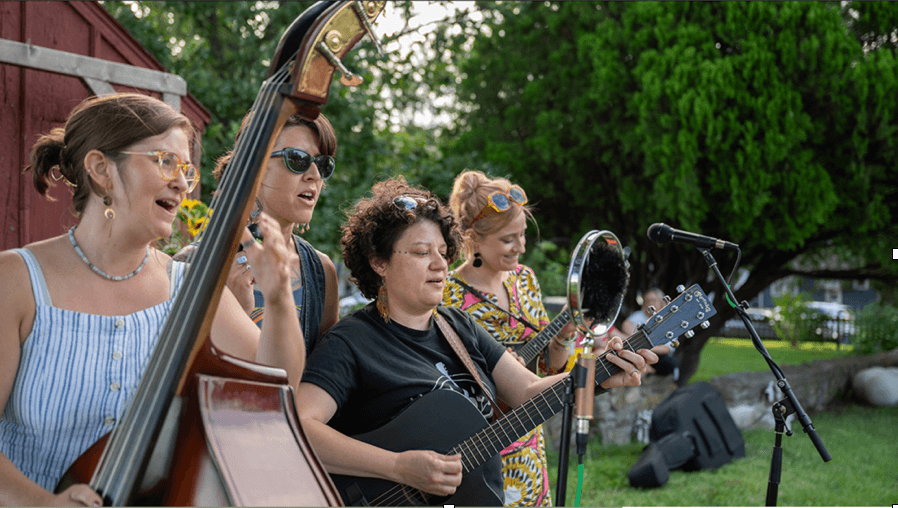
MCA Graduate Elexa Dawson (center on guitar) performs with fellow troubadours during one of her Good Way Garden gatherings.
Museums preserve the legacy of social movements, while organizations like yours help shape their future. How do these roles complement each other, and what advice would you give visitors inspired by Chimes of Freedom?
Museums like the Bruce Springsteen Center provide the essential foundation: proof that music has always moved history forward. When visitors walk through Chimes of Freedom, they realize they are part of an ongoing story. Archives give us the courage, context, and inspiration to act now.
Our role at Music to Life is to ensure that when an artist or fan leaves an exhibit feeling inspired, there is a clear runway for them to take action.
For visitors leaving the exhibit today – whether you’re a musician, an advocate, or simply a music lover – my advice is simple: Look local and look collaborative.
- If you’re a musician: Identify a specific issue in your neighborhood. Partner with a local nonprofit that already understands the problem, and ask how you might collaborate with them and apply your creative skills to serve their mission.
- If you’re a music lover: Seek out and support the artists in your town who are doing the less exciting but essential work of community building. Buy their music, attend their local workshops, and help connect them with local community leaders.
What gives me hope is seeing how today’s artists persist and refuse to be boxed in. They recognize that music isn’t just a commodity to be streamed; it remains one of the most powerful tools we have for human connection, civic health, and lasting community transformation.
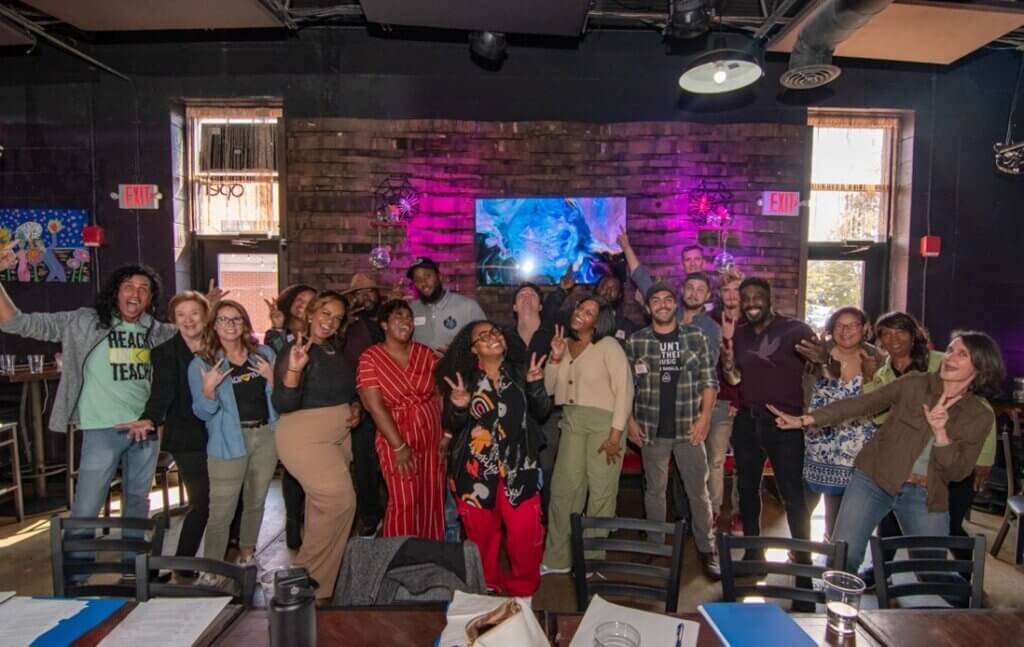
Artist participants at Music to Life’s Huntsville, AL MCA workshop. Equipping musicians as social entrepreneurs – connecting them with each other and vital resources in their community – ensures the legacy of the musician-driven civic engagement continues for generations to come
Melissa Kozlowski
Director of Curatorial Affairs
Bruce Springsteen Center for American Music
Monmouth University
September 10, 2026