
One of the greatest strengths of the Bruce Springsteen Center for American Music is that our collections tell the story of American music in many different ways. Sometimes that story is preserved in handwritten lyrics, iconic instruments, photographs, or concert posters. Other times, it lives in the books that generations of scholars, musicians, collectors, and enthusiasts have used to better understand the music that shaped our nation.
We are grateful to Monmouth University’s Assistant Vice President for Undergraduate Admission, Victoria Hopwood Bobik, her mother Ann, and brother Jonathan Hopwood for helping expand that story through the generous donation of her father David Hopwood’s collection of books devoted to jazz.
Today, these volumes are housed in the Louis Prima and Gia Maione Prima Foundation Research and Conference Room, where they are available for visitors and researchers to consult alongside the music history library donated by our Founding Executive Director, Bob Santelli, as well as other volumes that continue to grow the Center’s reference collection. Together, these resources help make the Center not only an exhibition space, but also a place for discovery, scholarship, and lifelong learning.
Few musical traditions have had a greater impact on American culture than jazz. Born from the creativity and resilience of Black communities in New Orleans at the turn of the twentieth century, jazz transformed the nation’s musical landscape through its emphasis on improvisation, innovation, and individual expression. Its influence can be heard across nearly every genre that followed—from rhythm and blues and rock and roll to soul, funk, hip-hop, country, and beyond. Jazz has also served as a powerful vehicle for cultural diplomacy, social change, and artistic experimentation, making it one of America’s most significant contributions to world culture.
Books play an essential role in preserving that legacy. While recordings allow us to hear the music itself, books provide the context that helps us understand the people, places, performances, and historical moments that gave rise to it. Biographies, oral histories, discographies, criticism, and archival research ensure that the stories behind the music remain accessible to future generations.
We are honored that Victoria, Jonathan, and Ann chose the Bruce Springsteen Center for American Music as the permanent home for David’s remarkable collection. His passion for jazz will continue to inspire students, educators, researchers, and music lovers for years to come, reminding us that every library reflects a lifetime of curiosity—and that sharing that curiosity is one of the greatest gifts of all.
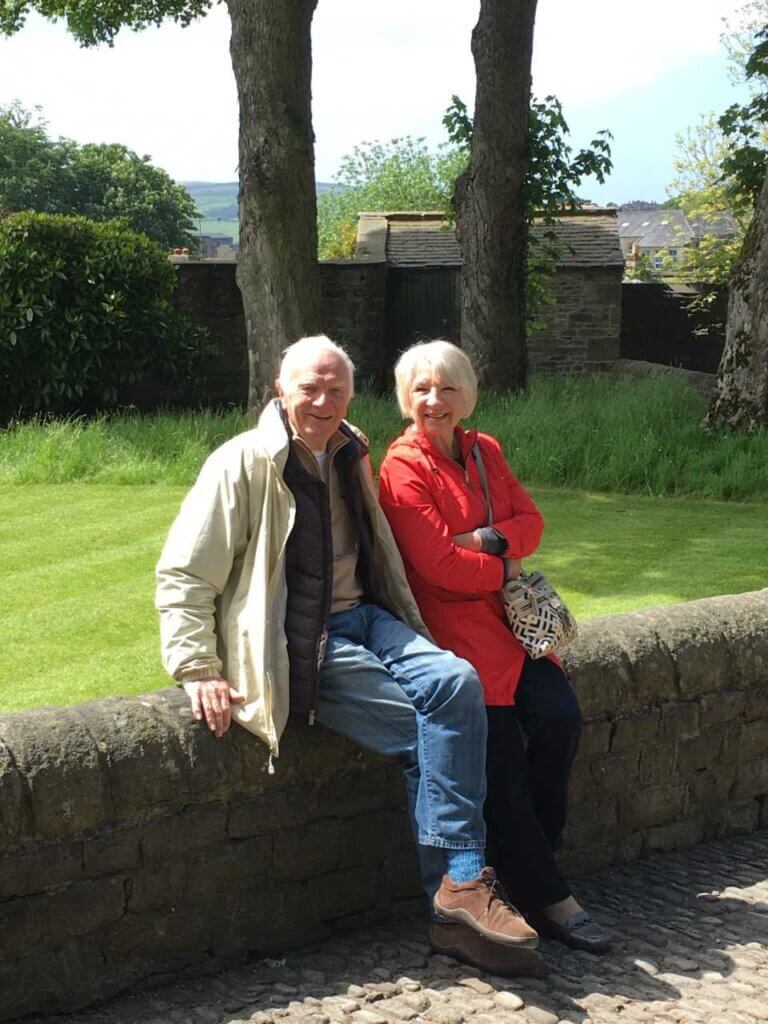
David and Ann Hopwood
I recently had the opportunity to chat with Victoria about her generosity. Here’s what she had to say:
Tell us about your father. What role did music—and especially jazz—play in his life?
My father began collecting jazz records and books as a 15-year old in England. From thousands of miles away, he listened to and was inspired by the music of America – the jazz and blues that helped to shape so much of American music today. When we moved to the United States in 1979 he then had the chance to experience his love for the music in person. From NYC to the Mississippi Delta, he followed his love for music to places he had only heard of as a young man living in England. He is 88 now and unfortunately suffers from dementia, but the jazz and blues has been influential to all our lives as a result of his passion for the music and story of both.
How did he begin collecting books about jazz? Was there a particular artist, era, or topic that first sparked his interest?
My father loved the most obvious jazz greats – Charlie Parker, Louis Armstrong, Ella Fitzgerald. But in his collection, it is clear that he delved into all corners of jazz and blues.
Are there any books in the collection that were especially meaningful to him?
In this collection, you will find plenty of biographies and many out of print histories of the people and places that made this music so vibrant. But those I remember most, believe it or not, are the many catalogs of jazz releases – lists of what music was released when and by what label. He used those books when he was collecting the music itself – and many of the vinyl records which he collected from around the world are a result of checking those lists and going out to find them.
Did he enjoy attending jazz performances? Are there musicians or venues that he particularly loved?
Yes – he went all over the country to listen to jazz, but in particular, he loved going to the Blue Note Club, Birdland and Village Vanguard in NYC.
What do you think drew him to learning about jazz through books rather than simply listening to recordings?
My father is an Aeronautical Engineer by trade but has an artist’s soul, I think. Before his dementia, he wrote poetry and was a visual artist. He also had an explorer’s mindset, I think. I think the “always wanting to know more” particularly about people was very much part of his life. For him, the books provided an additional depth to the music.
What made the Bruce Springsteen Center for American Music feel like the right home for this collection?
The Center is an absolutely remarkable documentation of American music. My father’s dementia would not allow him to enjoy it now, but I know he would have spent time there. He would have loved it. It is so obvious that the Center has been created by and will be visited by those with a similar appreciation and passion for music.
How does it feel knowing that students, researchers, and visitors will be able to use your father’s books for years to come?
Amazing – I have no words for how meaningful that is.
What do you hope someone might discover—or be inspired to explore—through this collection?
I hope that people might discover those in the creation of jazz and blues that don’t always come to mind – the lesser documented but as important figures that played such an important role in the creation of this music.
What do you think your father would think about his library becoming part of a public research collection?
I think he would be honored, as are we.
Is there anything else you’d like people to know about your father or the collection he assembled?
When I was preparing to donate this collection, many of the books I went through had notations about where and when he discovered the individual books. These notes often included business cards from the bookstore where he purchased them. And occasionally I would find a poem. My father is 88 now, but no longer able to appreciate the history he collected. But looking through this collection, it was confirmed for me what I have always known: that his passion for jazz was a monumentally important part of his life. We all now have some of his vinyl records that we play regularly. They have been the soundtrack to our lives for many years as I was growing up both in England and here in the U.S. and will continue to be important to me moving forward. I know that I am richer for it, and I am thrilled to share this richness with others through this donation.
Melissa Kozlowski
Director of Curatorial Affairs
Bruce Springsteen Center for American Music
Monmouth University
July 29, 2026