During Women’s History Month, we’re all encouraged to look more closely at stories that have lived too long in the margins of American history. That goes for us here at the Bruce Springsteen Center for American Music.
So this March, we’ll be out in the community sharing stories of the women whose creative, emotional, and professional labor helped sustain the E Street Band from its earliest days to the present. From family members and early collaborators to longstanding musical partners, these women shaped not only the band’s sound, but its culture and sense of purpose.
Adele Springsteen
Though not a musician herself, Adele Springsteen’s influence on her son Bruce’s life and work has been profound and enduring. A working mom before it was common, the legal secretary encouraged Bruce’s early interest in music and modeled a strong work ethic.
Adele’s presence echoes throughout Springsteen’s songwriting, particularly in his empathetic portrayals of working-class women and family life. As he sings in “The Wish”:
Dirty old street all slushed up in the rain and snow
Little boy and his ma shivering outside a rundown music store window
That night on top of a Christmas tree shines one beautiful star
And lying underneath a brand-new Japanese guitar
I remember in the morning, ma, hearing your alarm clock ring
I’d lie in bed and listen to you gettin’ ready for work
The sound of your makeup case on the sink
And the ladies at the office, all lipstick, perfume and rustlin’ skirts
And how proud and happy you always looked walking home from work
If pa’s eyes were windows into a world so deadly and true
You couldn’t stop me from looking but you kept me from crawlin’ through
And if it’s a funny old world, mama, where a little boy’s wishes come true
Well I got a few in my pocket and a special one just for you
It ain’t no phone call on Sunday, flowers or a Mother’s Day card
It ain’t no house on a hill with a garden and a nice little yard
I got my hot rod down on Bond Street, I’m older but you’ll know me in a glance
We’ll find us a little rock ‘n roll bar and baby we’ll go out and dance
Adele became a beloved onstage figure at Springsteen shows, dancing with her son during performances of songs like “Dancing in the Dark” into her 90s. She reminds us that the E Street story begins not onstage, but at home—where life lessons, encouragement, and sacrifice made the music possible.
Adele passed away in 2024.
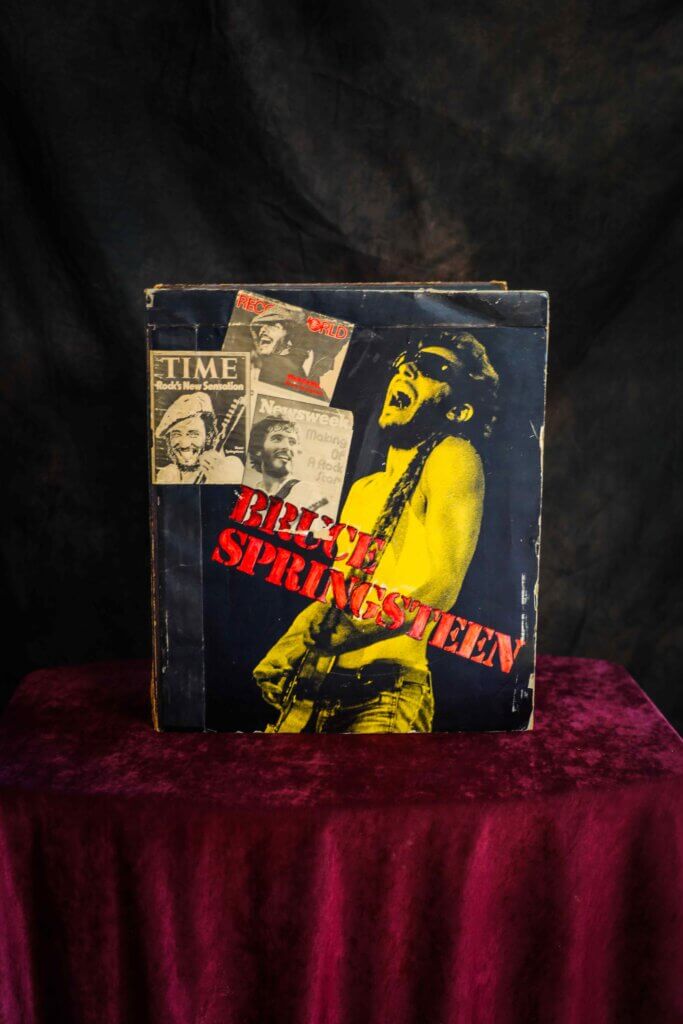
An Adele Springsteen scrapbook. Photographed by Mark Krajnak for the Bruce Springsteen Center for American Music.
Marion Vinyard
Gordon “Tex” Vinyard and his wife Marion opened the doors of their Freehold home to the Castiles, Bruce Springsteen’s first real band, and other local groups, in the 1960s. As Bruce recalls in his autobiography, Born to Run:
“They were in their thirties and childless, so they took in ‘strays,’ kids who either didn’t have much of a home life or were just looking to get out of the house to someplace less confining and a little more welcoming…Tex became our manager and Marion the house mother and seamstress to a team of misfit townie rock ‘n’ rollers…There were adults like Tex and Marion all across the United States, real unsung heroes of rock-‘n’-roll who made room in their homes and in their lives to cart the equipment; to buy the guitars; to let out their basements, their garages, for practice sessions; who’d found a place of understanding between the two combative worlds of teen life and adulthood…Without folks like these, the basements, the garages, the Elks clubs, the VFW halls would’ve been empty, and skinny, dreaming misfits would’ve had no place to go to learn how to turn into rock ‘n’ roll heroes.”
Tex and Marion retained a warm relationship with Bruce for the rest of their lives. Tex died in 1988; Marion in 2022.
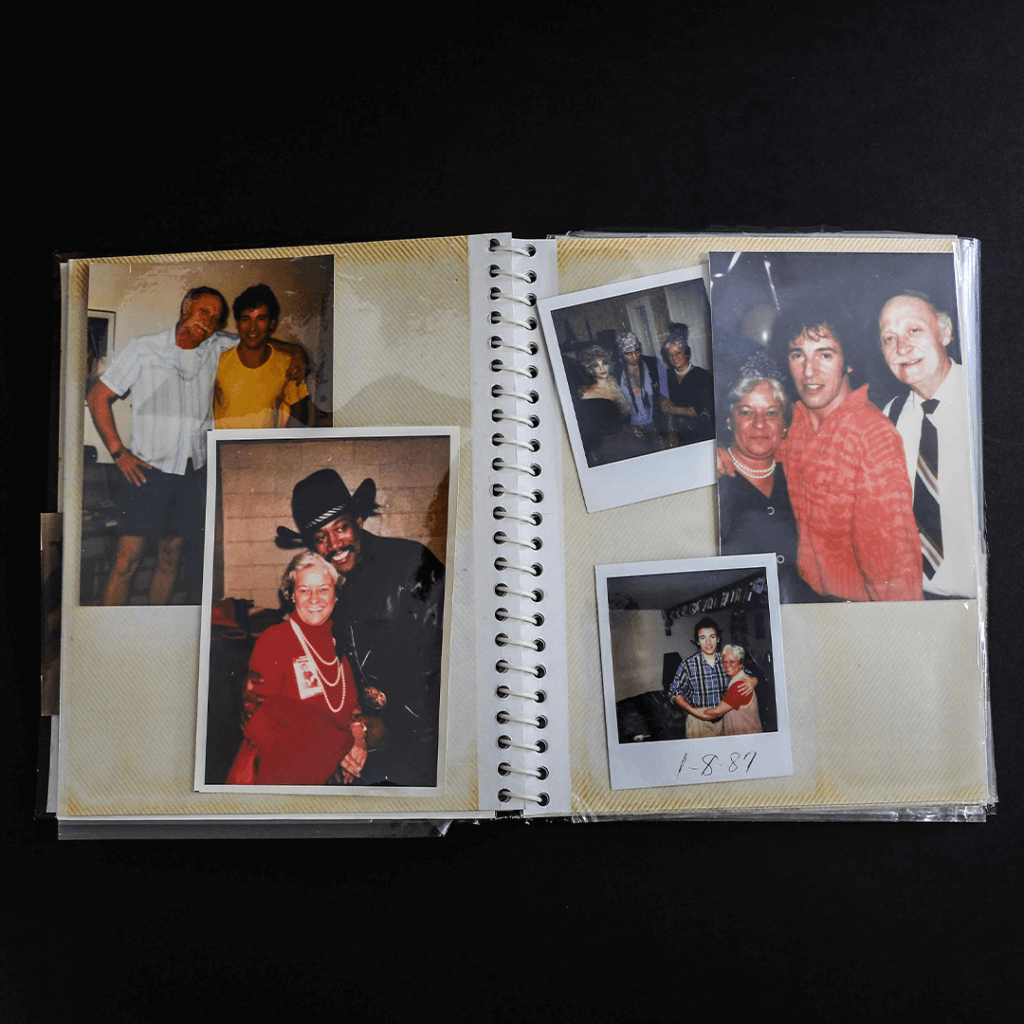
A Marion Vinyard scrapbook. Photographed by Mark Krajnak for the Bruce Springsteen Center for American Music.
Margaret Potter
Margaret Potter and her husband Tom Potter helped create one of the Jersey Shore’s most important incubators of late-1960s rock: the Upstage Club.
The Upstage was unlike most clubs of the era: musicians could gather after hours, experiment freely, and often play late into the night. Margaret, who Bruce remembers fondly in his autobiography as a “pixie-cut-wearing, sexually ambiguous, guitar-playing musician and bandleader,” helped maintain the welcoming, loosely structured environment that allowed young performers—including Bruce Springsteen, Steven Van Zandt, and Southside Johnny Lyon—to collaborate, jam, and develop their sound. While the musicians were onstage, Potter’s behind-the-scenes work helped sustain the community that formed around the club.
By providing a safe, supportive gathering place for young artists, Margaret helped nurture the creative cross-pollination that would eventually give rise to the distinctive “Sound of Asbury Park.” Her contribution reminds us that vibrant music scenes depend not only on performers, but also on the people who create spaces where creativity can thrive.
Margaret succumbed to cancer in 1994.
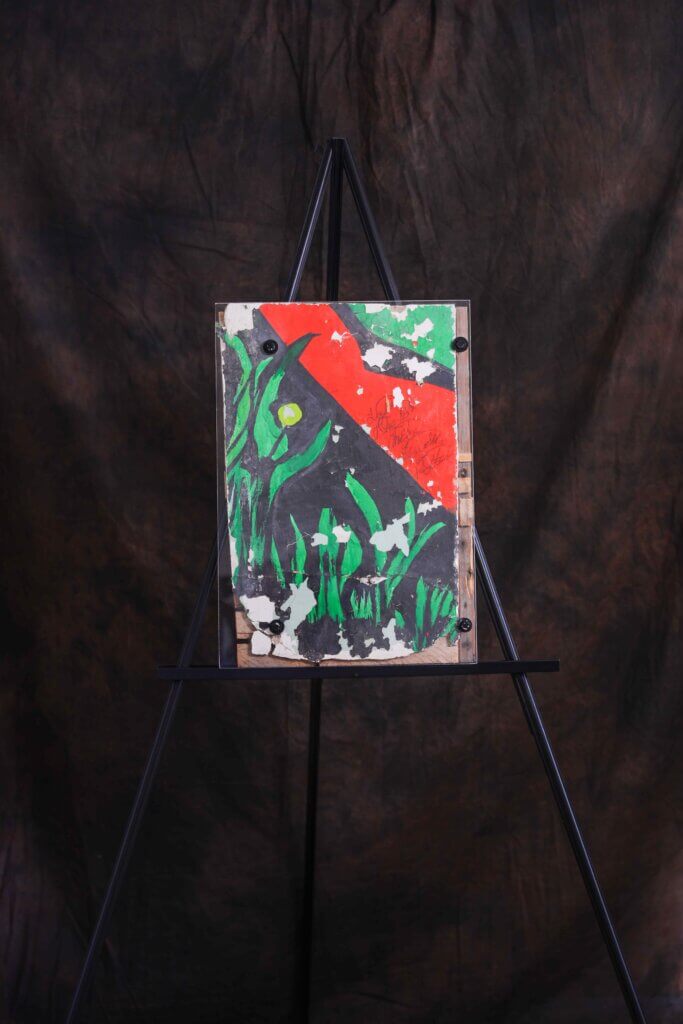
Art salvaged from the Upstage Club. Photographed by Mark Krajnak for the Bruce Springsteen Center for American Music.
Obediah “Obie” Dziedzic
Obediah “Obie” Dziedzic, widely regarded as one of Bruce Springsteen’s most devoted early supporters, went on to serve as his assistant—playing a key behind-the-scenes role during his rise. She was also closely involved in the Asbury Park music scene more broadly, working with Stevie Van Zandt and Southside Johnny and the Asbury Jukes.
As Peter Ames Carlin writes in his book Bruce:
“The intensity of Bruce’s feelings for his fans came to be symbolized in the form of Obie Dziedzic, whom he’d first met as a teenage fixture in the front row of Child/Steel Mill concerts in 1969. Dark haired, owl eyed, and shy, Dziedzic kept a respectful distance from her hero for the first year, even as she left homemade meals for Tinker West and the other crew members at the band’s soundboard. West pointed out Dziedzic to Bruce, and he began to look for her near the stage, and was rarely disappointed, since hardly anything could keep her away from his shows. When Steel Mill played its final gig at the Upstage in 1971, Bruce called out to Dziedzic from the stage and made a place for her at the band’s table at the post gig party they held in the Green Mermaid coffee bar. Dziedzic stayed just as committed during the Bruce Springsteen Band era, so Bruce began to call on her to drive him to the Student Prince shows. Ever since, Bruce made a habit of putting her name on his guest list at every show he played. When he got popular enough to play theaters and then arenas, he inserted a clause into his standard performance contract calling for a pair of tickets—front row center—to be left at the box office with Dziedzic’s name on them. Every night. No matter what city or country.”
Carlin quotes Bruce as saying, “She’s like patient zero! The genesis point. It was like, ‘Look! We have a fan! She came more than once! She does the things fans do!’ She carried that…and still does.”
Obie passed away in 2017.
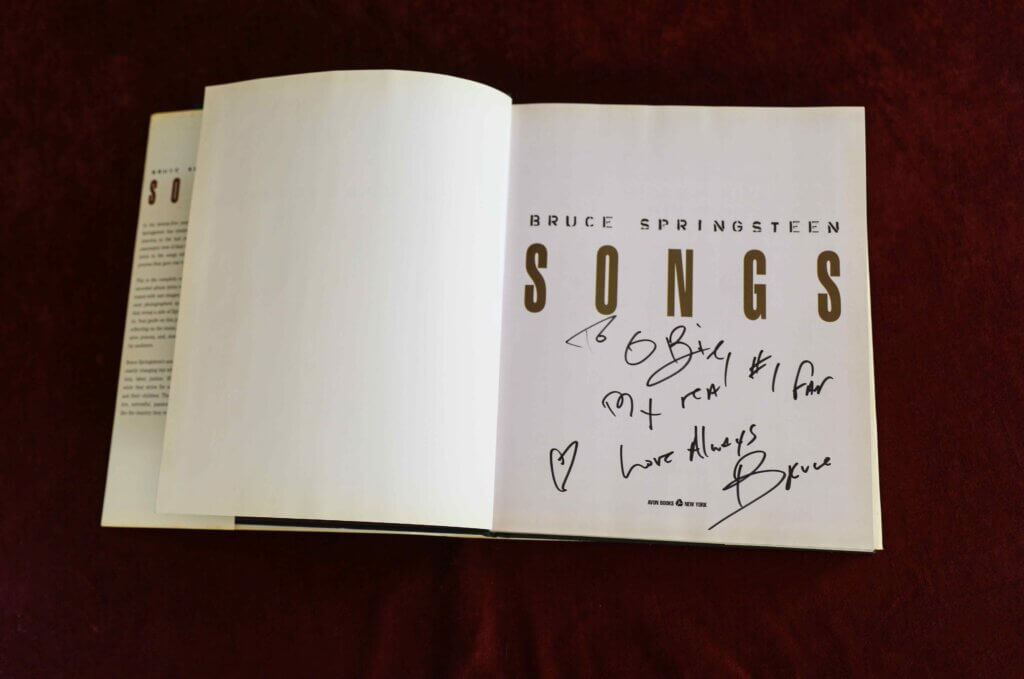
Obie’s signed copy of Songs. Photographed by Mark Krajnak for the Bruce Springsteen Center for American Music.
Barbara Dinkins Gunter
Barbara grew up in Asbury Park, singing at Good Hope Baptist Church. She and her friend Delores “Dee” Holmes joined The Bruce Springsteen Band in 1971 after answering a newspaper ad for two female gospel singers.
Gunter discusses answering Bruce’s call for “girl” singers in an oral history with Melissa Ziobro, October 2023. Courtesy BSCAM.

Courtesy Asbury Park Press.
As she recalled, Bruce said, “‘you’ve got it.’ He said, ‘you’ve got the job.’ And everyone was welcoming to us. Everyone was kind. It was as if it was a family. That’s what I really liked. And I also gravitated towards it because it was a very wholesome atmosphere. And even to this day, I’ve never been a drinker, smoker, or no recreational drugs. I gravitated towards them because they were so clean cut and so wholesome, and they cared.”
Barbara left the band to devote her time to gospel music, her original calling.
Delores “Dee” Holmes
Delores “Dee” Holmes grew up in Asbury Park and, like Barbara Dinkins Gunter, developed her voice singing gospel music in local churches. In 1971, she joined The Bruce Springsteen Band alongside Gunter after the two answered a newspaper advertisement seeking female gospel singers. Holmes’s powerful, soulful vocals added depth and emotional resonance to the band’s sound during a formative moment in its evolution, reflecting the strong influence of Black gospel traditions on Springsteen’s early music. As one of the few Black women to perform with a predominantly white rock band in the early 1970s, Holmes helped shape an environment of musical collaboration and mutual respect that stood in quiet but meaningful contrast to the racial divisions of the era.
Dee died in 2010.
The Bruce Springsteen Band with Gunter and Holmes, New York City, 1971
Suki Lahav
Suki Lahav brought a distinctive musical texture to the E Street Band during the mid-1970s, contributing violin and vocals at a pivotal moment in the band’s evolution. A classically trained musician, Lahav expanded the band’s sonic palette, adding melodic richness and emotional nuance to live performances.
Beyond her musicianship, Lahav’s presence challenged assumptions about who belonged on a rock stage. As one of the first women to perform regularly with the E Street Band, she helped open doors for future female collaborators.
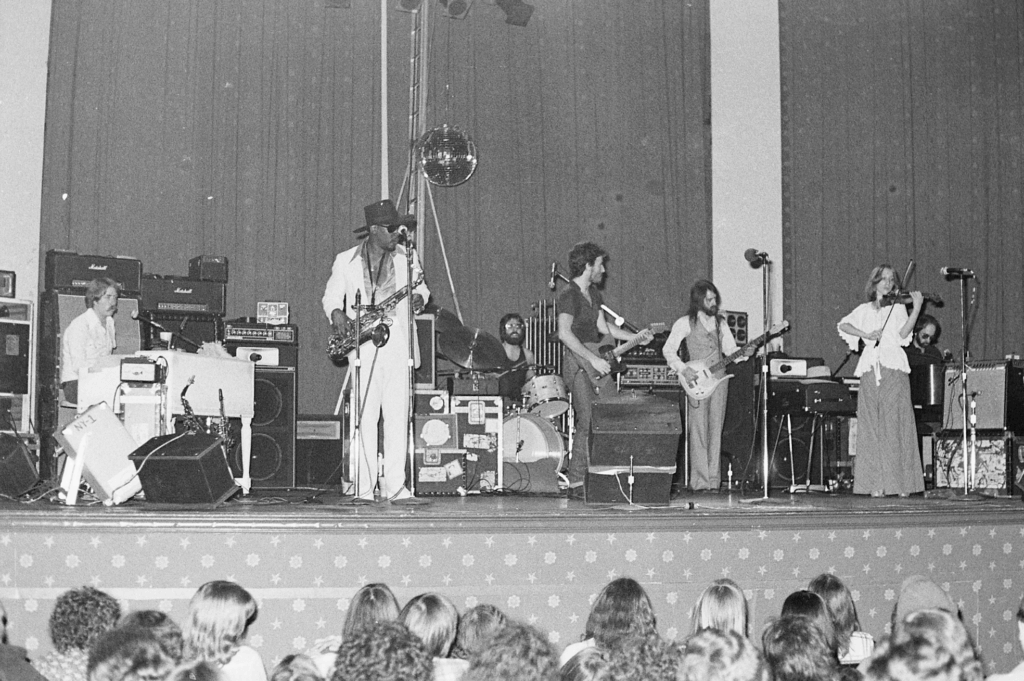
Bruce Springsteen and the E Street Band, 1974. Photographed by Phil Ceccola, courtesy of Russ Ceccola.
Patti Scialfa
Singer/guitarist Patti Scialfa began her tenure with the E Street Band in 1984, just prior to the Born in the USA tour. Her sensuous, soulful voice and expressive rhythm guitar work have been integral to the E Street Band ever since.
Scialfa began her career performing in local clubs and as a session singer in New York, working with Southside Johnny and the Asbury Jukes and others. She was also part of the trio Trickster, with Soozie Tyrell and Lisa Lowell, both of whom would later tour with the E Street Band.
Scialfa’s harmonies and duets with her husband, Bruce Springsteen, helped shape key Springsteen albums, including Tunnel of Love, The Rising, and Magic, while her acclaimed solo albums (Rumble Doll, 23rd Street Lullaby, and Play It as It Lays) showcase her introspective folk, country, and soul songwriting sensibilities.
Scialfa continues to maintain a solo career, along with her role in the E Street Band.
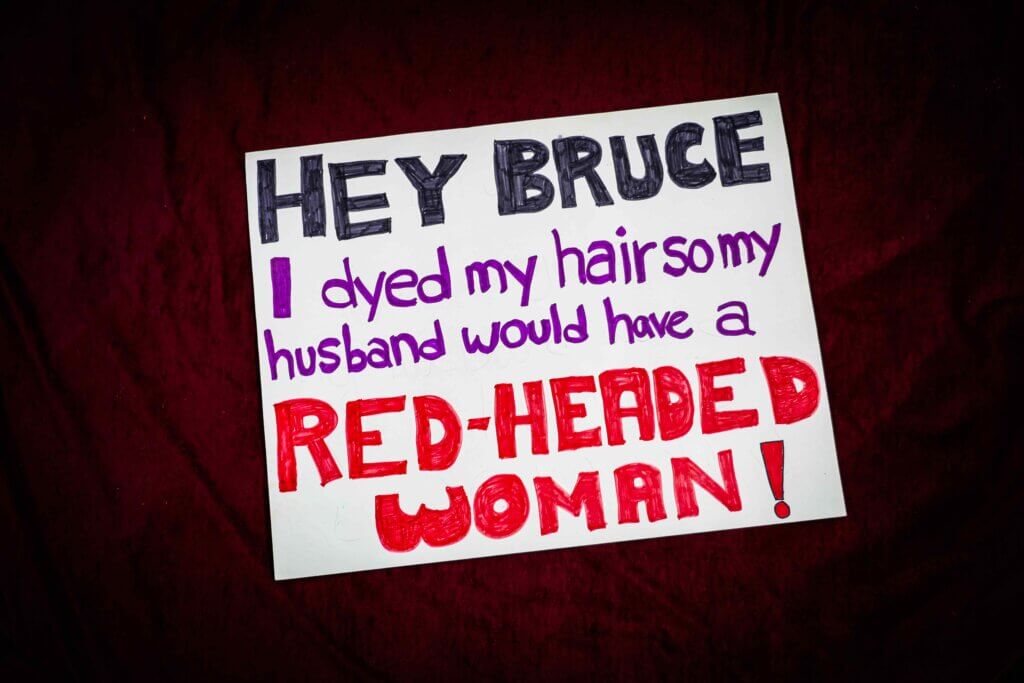
A fan-made sign requests “Red Headed Woman,” which Bruce performs in honor of wife Patti’s trademark locks. Photographed by Mark Krajnak for the Bruce Springsteen Center for American Music.
Soozie Tyrell
Soozie Tyrell is an American violinist, vocalist, and acoustic guitarist whose rich folk-inflected sound has been a defining element of Bruce Springsteen’s music since the 1990s. After studying music in Florida, she honed her craft as a street performer in New York, where she formed the trio Trickster with Patti Scialfa and Lisa Lowell. Tyrell later performed with Southside Johnny and led her own country-influenced projects before spending more than a decade collaborating with David Johansen (of the New York Dolls). First appearing with Springsteen on Lucky Town, her expressive strings and harmonies have since shaped albums including The Rising, Magic, and High Hopes.
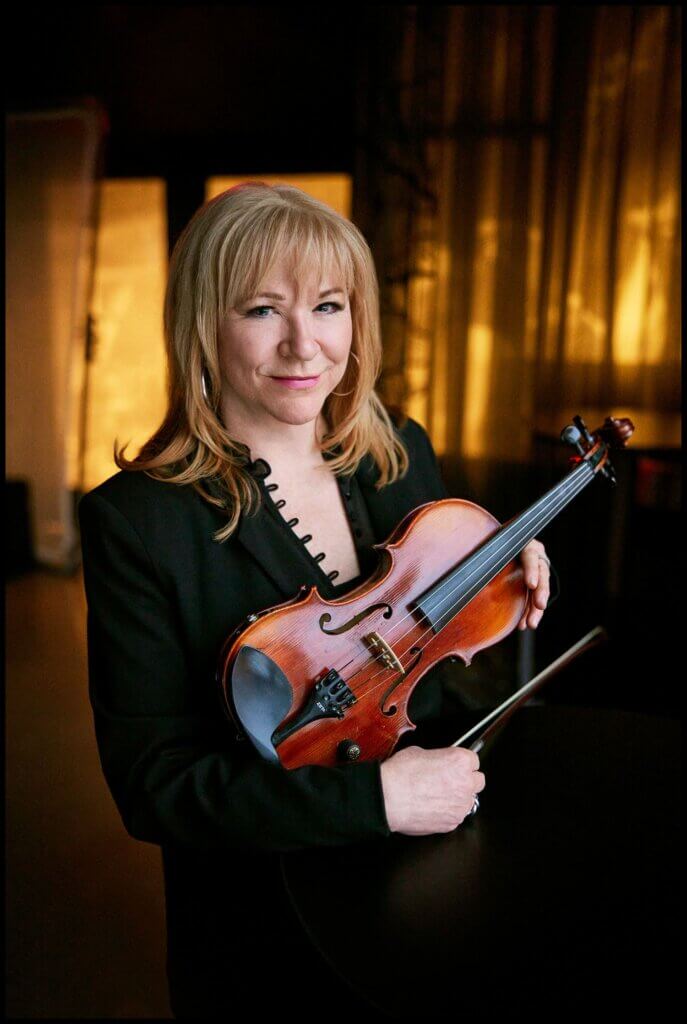
Courtesy Soozie Tyrell | Bruce Springsteen
The women you’ve just read about shaped the E Street Band in ways both seen and unseen. From family and mentors to bandmates and collaborators, their creativity, dedication, and care helped make the music—and the E Street community—what it is today.
Melissa Ziobro
Director of Curatorial Affairs
Bruce Springsteen Center for American Music
Monmouth University
March 5, 2026