One of the joys of working at the Bruce Springsteen Center for American Music is discovering the unexpected ways music connects us to the American story.
As our nation celebrates its 250th birthday, conversations about the Revolutionary War are happening everywhere. We tend to think about battles, generals, and founding documents. But here at the Center, we are interested in another question: What did the American Revolution sound like?
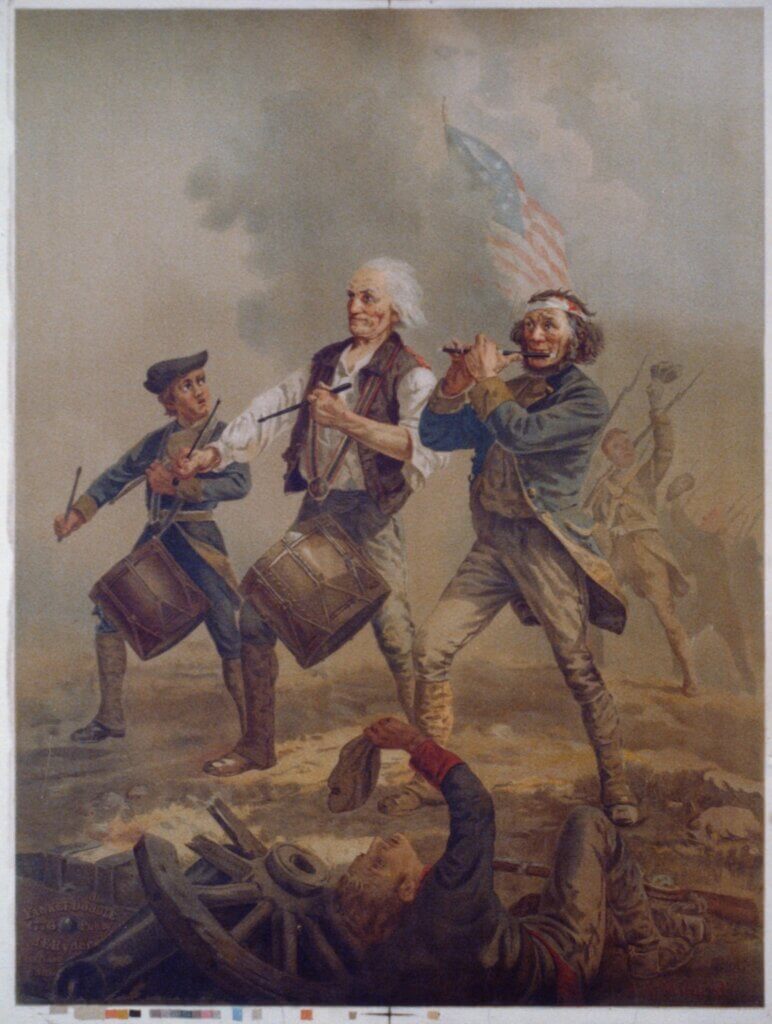
“Yankee Doodle 1776” / A.M. Willard, c. 1876.
Courtesy Library of Congress
That question is woven throughout Chimes of Freedom: Protest, Politics, and the Power of Song, our special exhibition exploring how music has shaped public life in the United States. The exhibit spans centuries, tracing the ways songs, instruments, and performers have reflected the hopes, struggles, and aspirations of Americans. While visitors will encounter artifacts connected to civil rights, labor movements, war and peace, immigration, and other pivotal moments in our history, some of the oldest objects in the exhibition date back to the very founding of the nation itself.
Among them are two Revolutionary War-era fifes generously loaned to us by the Passaic County Department of Cultural & Historic Affairs.
These instruments offer a fascinating reminder that music was an essential part of daily life during the Revolutionary era. Military musicians helped communicate orders, regulate camp life, and boost morale. At the same time, music provided comfort, entertainment, and a sense of community during a period of profound uncertainty and change.
Standing before these fifes today, it is impossible not to wonder about the people who once played them. What songs echoed through encampments and town squares? What hopes did those melodies carry? What did freedom sound like to Americans in the eighteenth century?
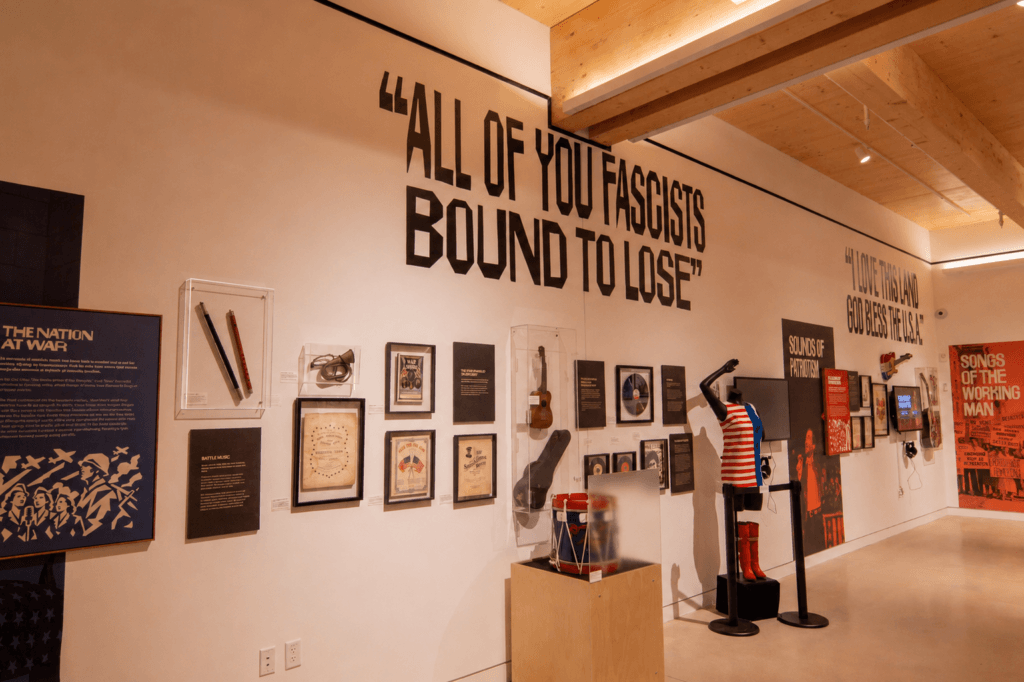
Those questions remain at the heart of Chimes of Freedom. Music has long served as a vehicle for protest, patriotism, remembrance, and change. From the Revolutionary War to the present day, Americans have turned to song to express their beliefs, challenge injustice, celebrate victories, and imagine a better future.
As we commemorate 250 years of American history, we are grateful to partners like the Passaic County Department of Cultural & Historic Affairs, whose stewardship of these remarkable artifacts helps us tell a richer and more complete story. Their loan reminds us that the history of American music did not begin with recorded sound or even with the birth of popular music. It stretches back to the nation’s earliest days, when the sounds of fifes, flutes, drums, and voices accompanied the creation of the American experiment.
Two centuries later, those sounds still have something to teach us.
Melissa Kozlowski
Director of Curatorial Affairs
Bruce Springsteen Center for American Music
Monmouth University
July 14, 2026