This World Piano Day, we are looking at a few of the artists that have played the keys for the E Street Band.
Celebrated annually on the 88th day of the year to symbolize the 88 keys on a standard piano, World Piano Day is a global tribute to one of music’s most versatile and expressive instruments. From classical concert halls to rock stages, the piano has shaped the sound of countless genres, serving as both a rhythmic backbone and an emotional storyteller.
Few bands demonstrate the power of the piano in rock music quite like the E Street Band. From the earliest days of Bruce Springsteen’s career, the piano has been central to the group’s sound, bridging influences from rhythm and blues, soul, jazz, gospel, and early rock and roll. Whether driving the barroom energy of an up-tempo anthem or adding emotional depth to a ballad, the piano has helped define what fans recognize as the “E Street sound.”
That sound didn’t emerge in a vacuum. It draws heavily from traditions shaped by artists like Ray Charles, Jerry Lee Lewis, and Fats Domino: performers who blurred the lines between genres and brought the piano to the forefront of popular music. Their influence can be heard in the E Street Band’s blend of rock urgency and soulful expression.
Over the decades, several extraordinary musicians have taken their place behind the keys for the E Street Band, each bringing their own style and sensibility:
David Sancious
A founding member of the E Street Band, Sancious helped shape the group’s earliest sound in the early 1970s. A prodigiously talented multi-instrumentalist, his work on albums like Greetings from Asbury Park, NJ and The Wild, the Innocent & the E Street Shuffle blended rock with jazz and classical influences. His intricate playing added sophistication and improvisational flair to the band’s formative years.
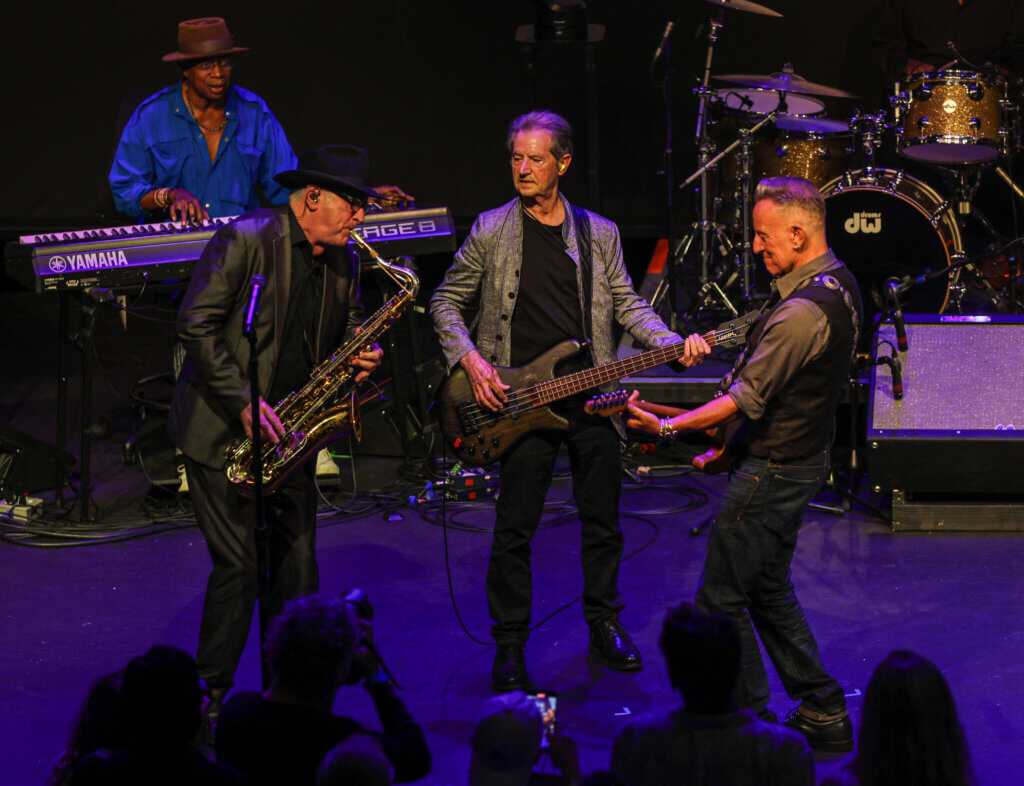
David on the keys at the Springsteen Center’s Born to Run 50th Anniversary Symposium at Monmouth University in September 2025. Photo by Mark Krajnak.
Danny Federici
While perhaps best known for his work on the accordion and organ, Federici also contributed to the band’s keyboard textures more broadly. As a founding member, his sound added warmth and atmosphere, complementing the piano and helping create the layered, full-bodied arrangements that became an E Street hallmark.
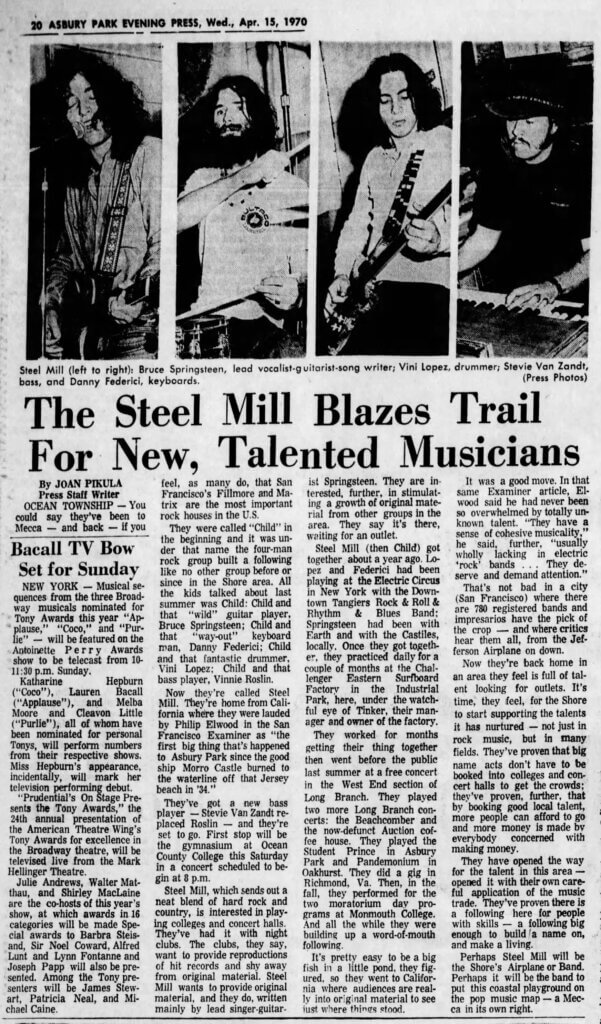
Danny Federici’s relationship with Bruce actually preceded the formation of the E Street Band, as you can see in this 1970 article.
Roy Bittan
Known as “The Professor,” Bittan has been the band’s primary pianist since 1974. His style, both precise and emotionally resonant, became a defining feature of Springsteen’s music, particularly on landmark albums like Born to Run and Darkness on the Edge of Town. From sweeping, cinematic intros to delicate melodic lines, Bittan’s playing is integral to some of the band’s most iconic songs.
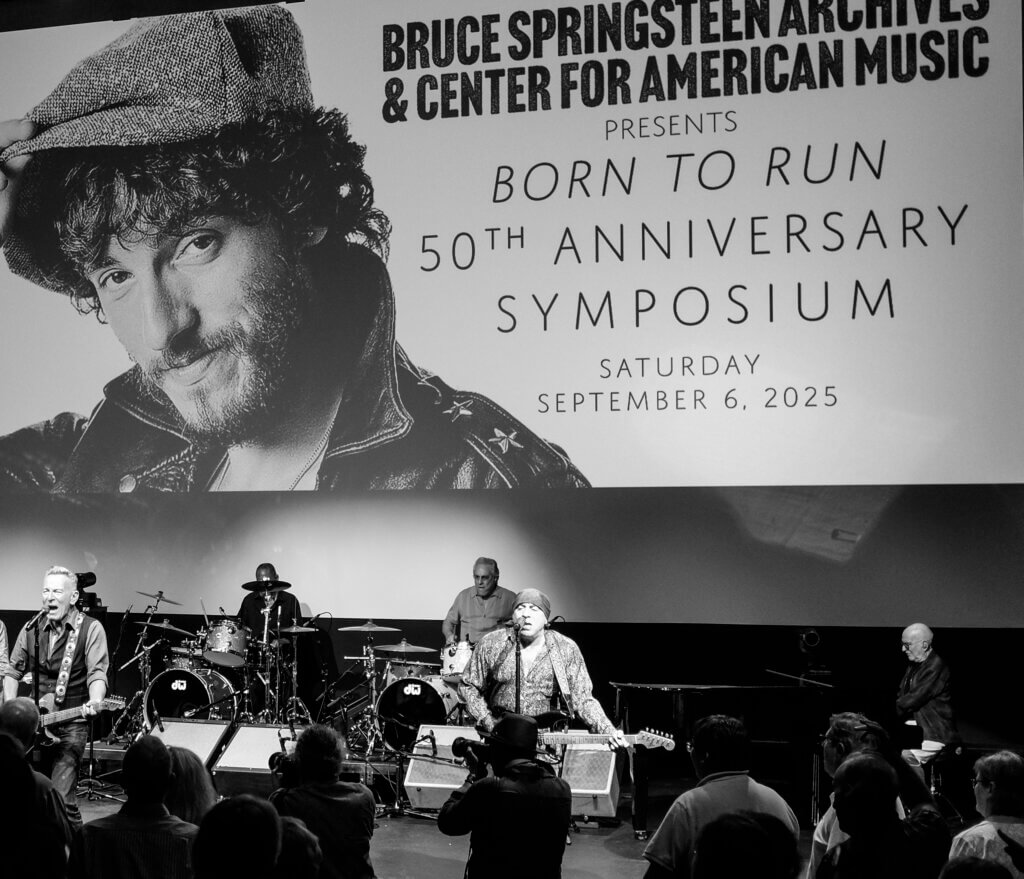
Roy on the keys at our Born to Run 50th Anniversary Symposium at Monmouth University in September 2025. Photo by Mark Krajnak.
Charlie Giordano
Joining the E Street Band during the period of Federici’s illness and ultimately his passing in 2008, Giordano has carried forward the group’s keyboard tradition. A seasoned musician with deep roots in rock and Americana, he honors the band’s legacy while bringing his own experience and touch to live performances and recordings.
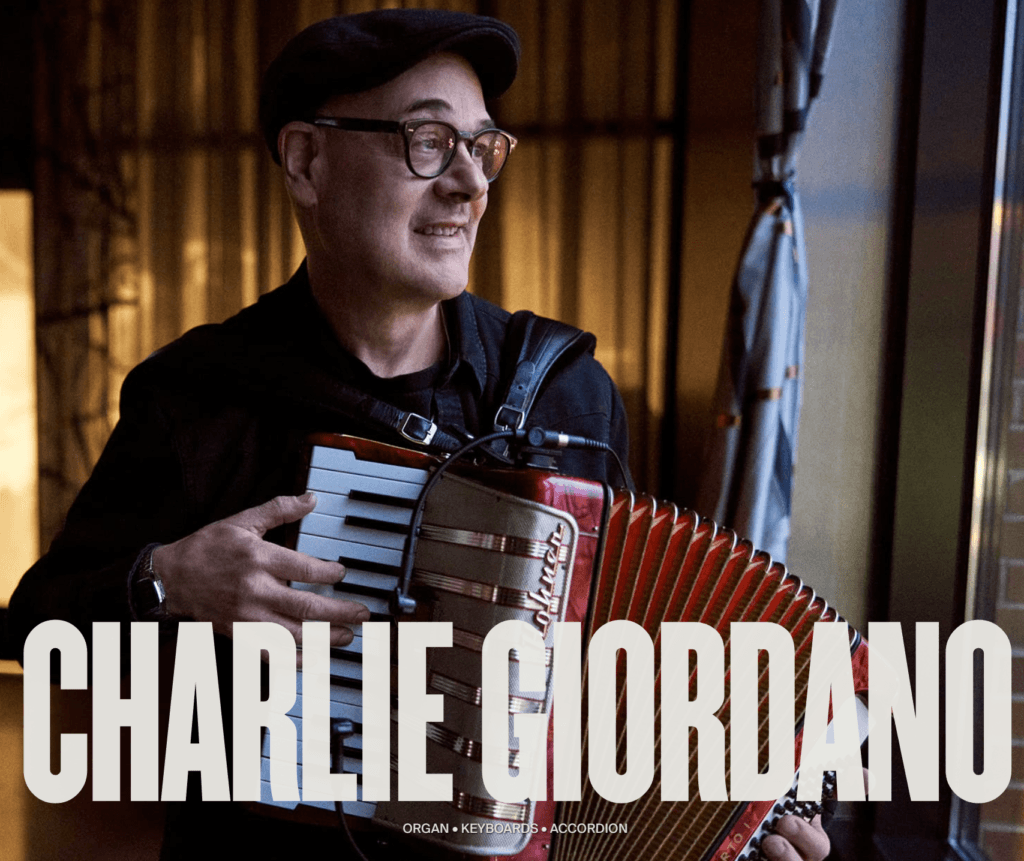
Courtesy brucespringsteen.net.
Bruce Springsteen
Last, but not least, we must acknowledge that Bruce Springsteen himself has often sat behind the keys.
While best known as a guitarist and frontman, Springsteen’s relationship with the piano has been essential to his songwriting and performance style. Many of his most enduring songs were composed at the piano, where melody and narrative come together in a more intimate, stripped-down form. The instrument has long served as a tool for storytelling, allowing Springsteen to shape the emotional core of a song before it is brought to life by the full E Street Band.
Onstage, Springsteen has frequently turned to the piano for some of his most memorable performances. Songs like “Thunder Road,” “Backstreets,” and “New York City Serenade” often begin with him alone at the keys, setting a reflective tone before the band gradually builds around him.
Springsteen has also spoken about the role of the piano in his creative process. In his memoir, Born to Run, he reflects on how sitting at the piano allows him to focus on structure and storytelling, describing it as a way to slow a song down to its essentials and hear it more clearly. The piano, in this sense, becomes not just an instrument, but a compositional partner that helps him refine the narrative voice that defines so much of his work.
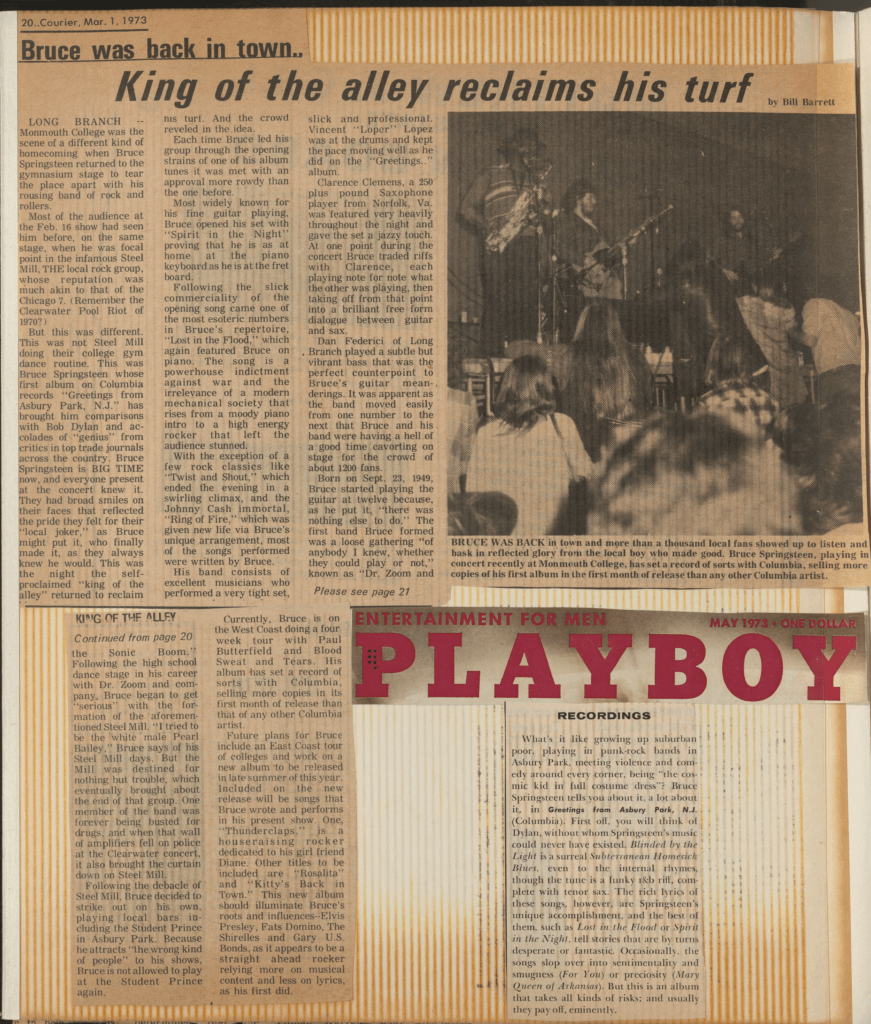
This 1973 article from an Adele Springsteen scrapbook in the Center’s collection notes that Bruce, playing at our then College, now University in 1973, is “as at home at the piano keyboard as he is at the fretboard.”
Final Notes
Together, these musicians illustrate how the piano has remained essential to the evolving sound of the E Street Band. Across decades of change, the instrument has anchored the band’s music while allowing for innovation and reinterpretation.
At its core, this story reflects something larger. The piano is not just an instrument; it is a connective thread linking musical traditions, generations of artists, and audiences around the world. By exploring its role in the E Street Band, we gain insight into how music is built, shared, and sustained over time.
This World Piano Day, we celebrate not only the musicians who have played these keys, but also the enduring power of music to tell stories, preserve history, and bring people together: which is really at the heart of the Center’s mission to explore and honor the cultural impact of American music.
Melissa Ziobro
Director of Curatorial Affairs
Bruce Springsteen Center for American Music
Monmouth University
March 29, 2026