Today we’re wishing a very Happy Birthday to the Stone Pony! While the famed Jersey Shore music venue opened on this day in 1974, the building operated as Mrs. Jay’s for many decades prior. We at the Bruce Springsteen Center for American Music (BSCAM) are working to get the building listed on the National Register of Historic Places, and thus far have received a certificate of eligibility (the first step in the listing process). Read on for more about the building’s storied history, and to catch a replay of our September 2024 edition of “Conversations with our Curator” featuring Nick Corasaniti discussing his book I Don’t Want to Go Home: An Oral History of the Stone Pony.
Mrs. Jay’s Era
From the early 1920s—1970s, the site we now recognize as the Stone Pony operated as Mrs. Jay’s. The concession stand, restaurant, bar, and music hall was billed as “the largest bar in Asbury Park” and “one of the best-known restaurants along the Jersey coast.”
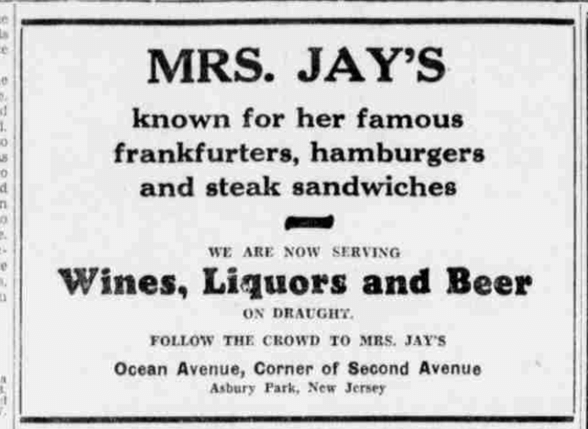
December 22, 1933, Asbury Park Evening Press
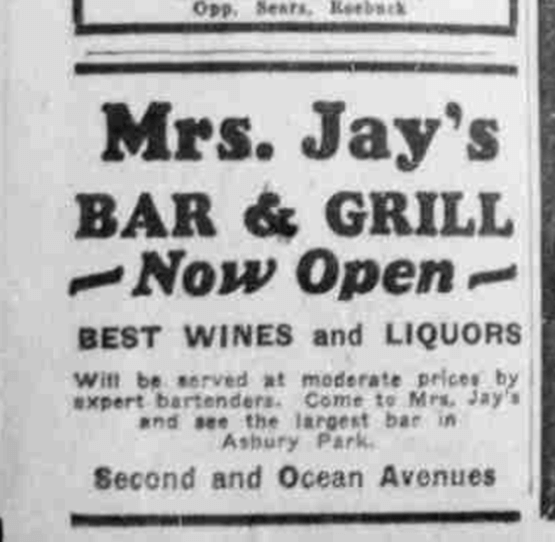
December 22, 1933, Asbury Park Evening Press
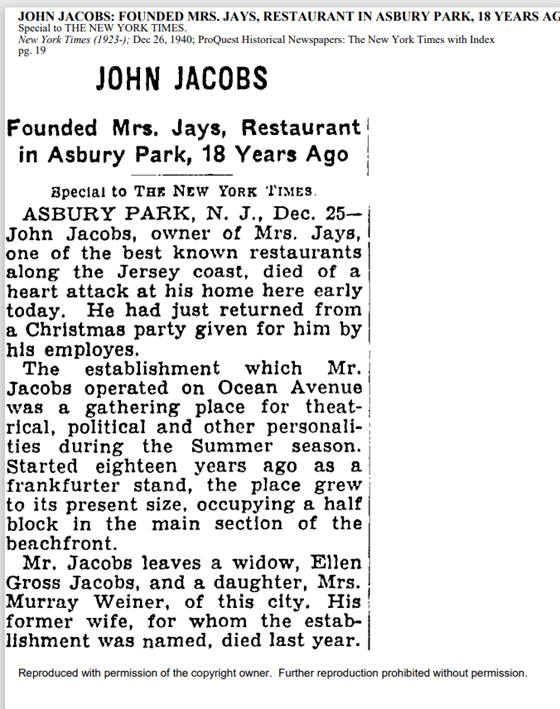
December 26, 1940, New York Times
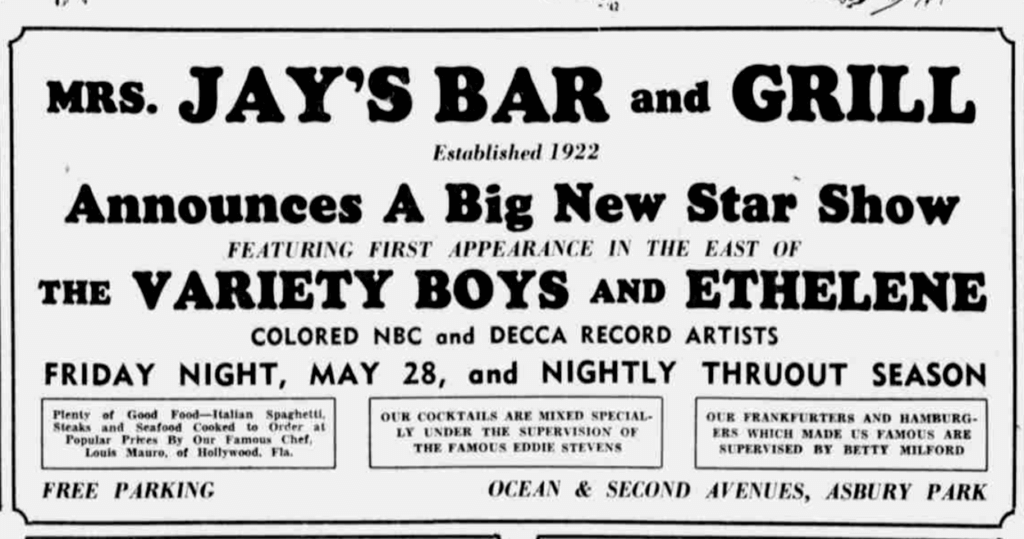
May 26, 1943, Asbury Park Evening Press
The Stone Pony Era
Since 1974, with occasional interruptions, the building has operated as the Stone Pony.
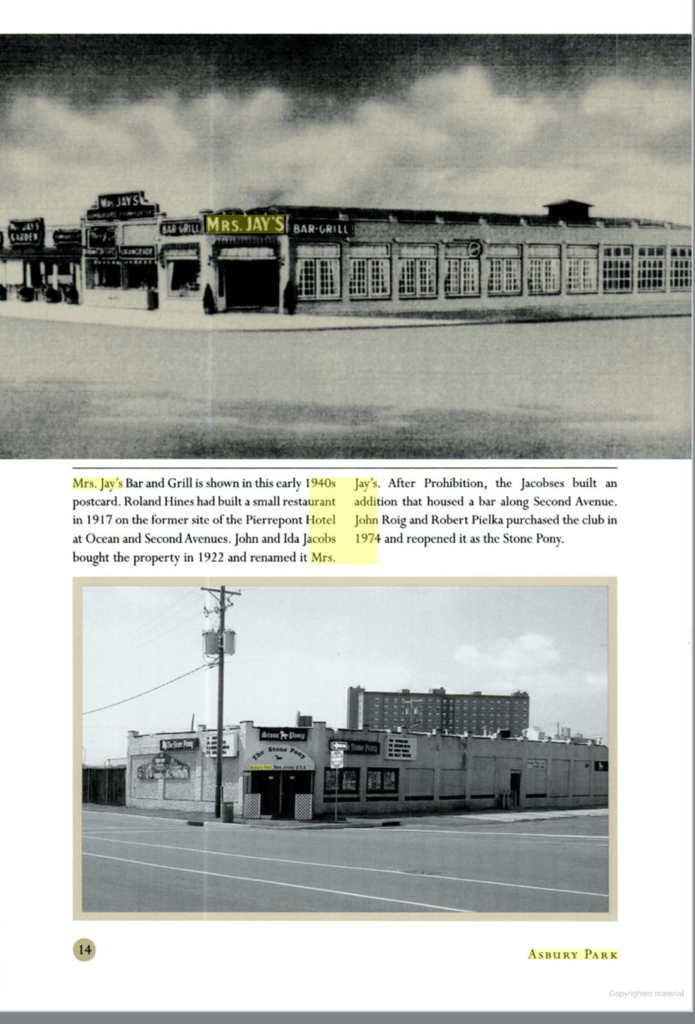
Comparison of Mrs. Jay’s and the Stone Pony from Robert Gilinky’s book Asbury Park and Neptune (Arcadia Publishing, 2011)
According to the club’s official history, Stone Pony founders John P. “Jack” Roig and Robert “Butch” Pielka first crossed paths while working at a boardwalk club south of Asbury Park, in Seaside Heights. When Roig purchased a neglected building in Asbury Park—then home to an abandoned, short-lived disco called the Magic Touch—he turned to Pielka for his managerial instincts and hands-on construction skills. The two could not have known that their partnership would give rise to one of the most enduring live-music venues in the world.
For years, legend held that the club’s name came to Pielka in a dream. In 2014, Roig finally set the record straight: the name “Stone Pony” was inspired by a woman’s shirt patterned with small horses. Like much of the club’s early history, the name emerged organically—without a grand plan, but with a sense of possibility.
That sense of possibility was tested immediately. The Stone Pony opened on February 8, 1974, during a snowstorm that blanketed Asbury Park. As Roig recalls, the night’s receipts totaled one dollar. Within a year, closure loomed. What saved the club was live music, specifically, the emergence of house bands that turned the Pony into a destination rather than a gamble.
The most important of those early bands was arguably the Blackberry Booze Band, featuring Southside Johnny Lyon and Steven Van Zandt. As the group evolved into Southside Johnny and the Asbury Jukes, the Pony found its identity: sweaty, horn-driven rhythm and blues delivered with swagger and soul. The band played three nights a week, drawing crowds large enough to keep the doors open and giving rise to a scene that felt electric and communal.
As Roig recalled, “The local bands were the ones that kept the place going. We were able to open seven nights a week with music.”
Van Zandt soon joined Bruce Springsteen’s E Street Band while continuing to manage and produce the Jukes, helping bring their sound to a wider audience. In 1976, the Jukes signed with Epic Records, and a live Memorial Day radio broadcast from The Stone Pony—featuring Springsteen, E Street Band members, Ronnie Spector, and Lee Dorsey—catapulted the club, the band, and Asbury Park onto the national stage. Their rendition of Sam Cooke’s Havin’ a Party became an unofficial anthem for the Pony and the city itself.
One thing to keep in mind about the Pony—it did not make Bruce Springsteen’s career. As Roig notes, “I always get a kick out of everybody who says, ‘Springsteen started there!’ No, no, no. Bruce did not start there. He had two albums out already. We started with him. So, you have to face reality. If it wasn’t for him, I don’t know, maybe I’d be shining shoes at Grand Central.”
By the late 1970s and 1980s, the Stone Pony had become both a home base for local musicians and a proving ground for artists on the rise. Legends and future stars alike passed through its doors, drawn by a room known for its honesty and its crowd. Musicians learned quickly that the Pony demanded connection, not spectacle.
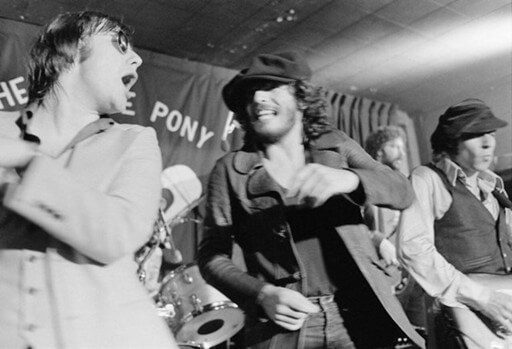
Southside Johnny and Bruce Springsteen at the Stone Pony, 1975, courtesy Barbara Pyle / NJ.com.
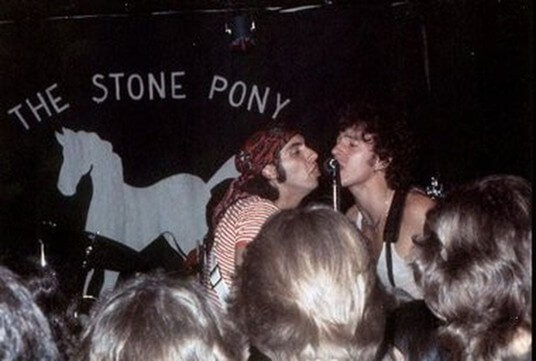
Steven Van Zandt and Bruce Springsteen perform at the Stone Pony in 1976, courtesy NJ.com.
Over the years, the club has endured countless setbacks—bankruptcy, closure, reinvention—but its absence was always felt. As NJ Governor Christine Todd Whitman noted at a re-opening of the club in May 2000, “A visit to the Stone Pony has been considered a pilgrimage to rock ‘n’ roll fans around the world…It is a place that is important—not just to us, but to the world.”
More than a stage, the Stone Pony is a living archive of American music—one built not on nostalgia alone, but on continuity, community, and the belief that live music still matters. And that is why we believe the building deserves to be listed on the National Register of Historic Places.
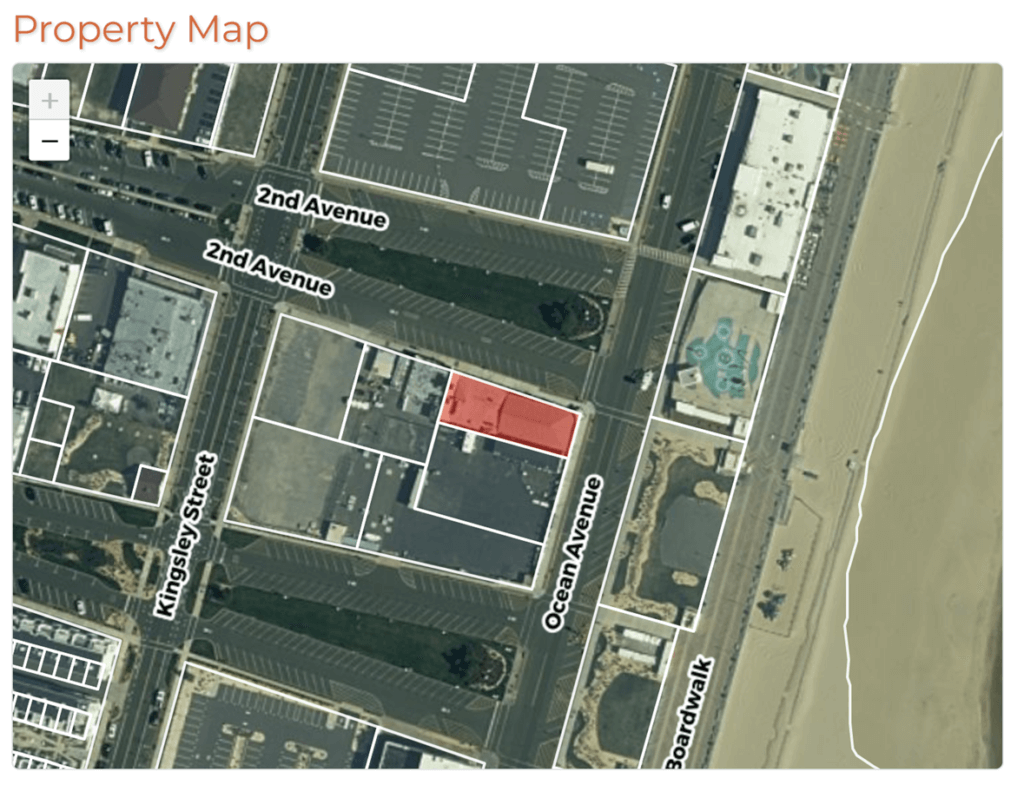
Map courtesy njparcels.com.
The National Register of Historic Places
The National Register of Historic Places is the United States’ official list of buildings, sites, structures, and districts recognized for their significance in American history, architecture, culture, or archaeology. Administered by the National Park Service, the Register documents places that have made meaningful contributions to the nation’s story, whether through important events, influential people, distinctive design, or cultural impact. To be listed, a property is evaluated through a formal nomination process that assesses its historical significance, age (generally at least 50 years), and integrity, meaning it still conveys its historic character.
Listing in the National Register does not restrict private ownership or use, or mean a building can never be demolished—but it does provide recognition, helps guide preservation planning, and can make properties eligible for preservation grants and tax incentives. Ultimately, the Register exists to identify and honor places that help Americans understand where we’ve been—and why those places still matter today.
I teach a historic preservation class here at Monmouth University and serve on the board of the state’s preservation non-profit, Preservation NJ. It is my professional opinion that the Stone Pony building is eligible for listing under Criterion A, “Event,” as the property illustrates the history of recreation at the Jersey shore, as well as trends in American music history more broadly.
I believe that the building is also eligible for listing under Criterion B, “Person,” as it is associated with significant people of the American past. If we were to select merely one individual, it would be Bruce Springsteen; however, as outlined in the narrative above, the site has been instrumental in the careers of numerous other noted musicians for over 50 years (even predating the Stone Pony and going back to the Mrs. Jay’s days).
When seeking listing on the National Register of Historic Places, one must first start with their State Historic Preservation Office (SHPO). The NJ SHPO agreed with our initial assessment of the property’s significance and awarded it a “Certificate of Eligibility” on 3/27/2024.
Once a property receives a Certificate of Eligibility from a SHPO, the next step is to prepare the full National Register nomination. This is a more detailed document than the preliminary or eligibility materials and includes a finalized statement of significance, physical description, boundary justification, photographs, maps, and supporting documentation. We’re working on that—but realistically, the final submission is unlikely to happen before we open our new Center this spring.
I Don’t Want to Go Home
I am well over my usual self-imposed roughly 1,000 word limit, here, so it’s time to wrap this blog up, but, if you don’t want to stop learning more about the Stone Pony, catch a replay of the September 2024 edition of “Conversations with our Curator,” featuring Nick Corasaniti talking about his book, I Don’t Want to Go Home: An Oral History of the Stone Pony.
Fifty-two years after opening its doors in the middle of a snowstorm, the Stone Pony remains a place where history is not just remembered, but made—night after night, song after song.
Melissa Ziobro
Director of Curatorial Affairs
Bruce Springsteen Center for American Music
Monmouth University
February 8, 2026